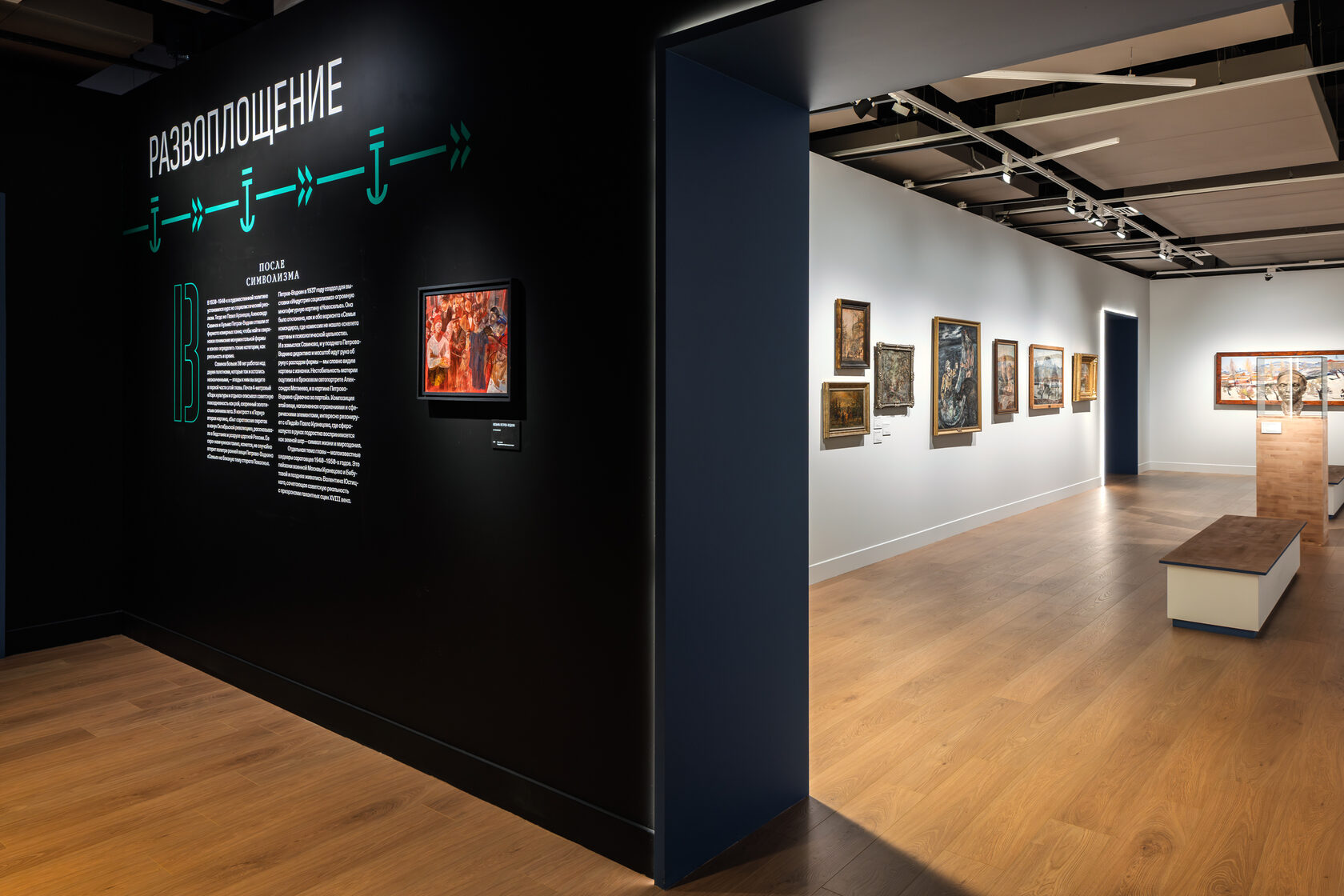
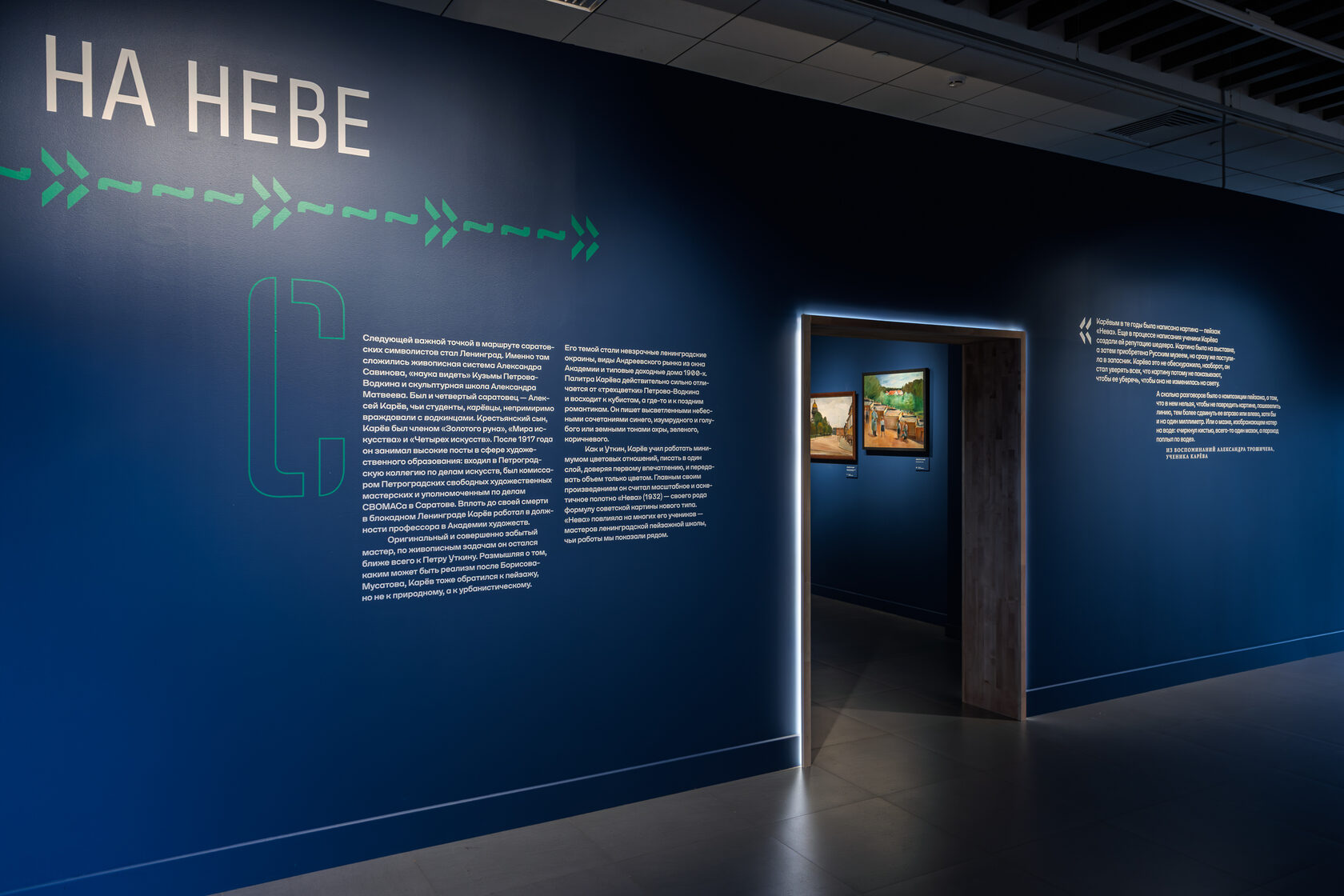
Volga. Moscow. Neva.
This exhibition brings together a constellation of artists from Saratov, a city on the Volga, who helped shape the art of Moscow and Leningrad in the first half of the twentieth century. The Saratov school of painting is best known for its links to Viktor Borisov-Musatov and his circle at the turn of the twentieth century, and to the Blue Rose group, which seemed to lose momentum after the Revolution. Yet in the decades that followed, the Blue Rose artists continued to play an active part in Soviet artistic life, responding sensitively to the historical changes unfolding around them.
Arranged chronologically, the exhibition traces the paths of the Saratov artists from the celebrated Blue Rose and Scarlet Rose groups through the radical experiments of the avant-garde, Soviet fresco projects, and the search for new forms of painting from the 1930s to the 1950s. Along the way, visitors discover the history of early Soviet art through the distinctive lens of the Saratov school.
Curator: Ksenia Guseva
museum: The Museum of Moscow
area: 2000 m2
exhibits: 1000 pcs
types of exhibits: paintings, graphics, textile, books, photography, video.
area: 2000 m2
exhibits: 1000 pcs
types of exhibits: paintings, graphics, textile, books, photography, video.
exhibition architecture
The Industry of Looks The Saratov Symbolists in Moscow and Leningrad, 1920s - 1940s
photos by Olga Alekseeva
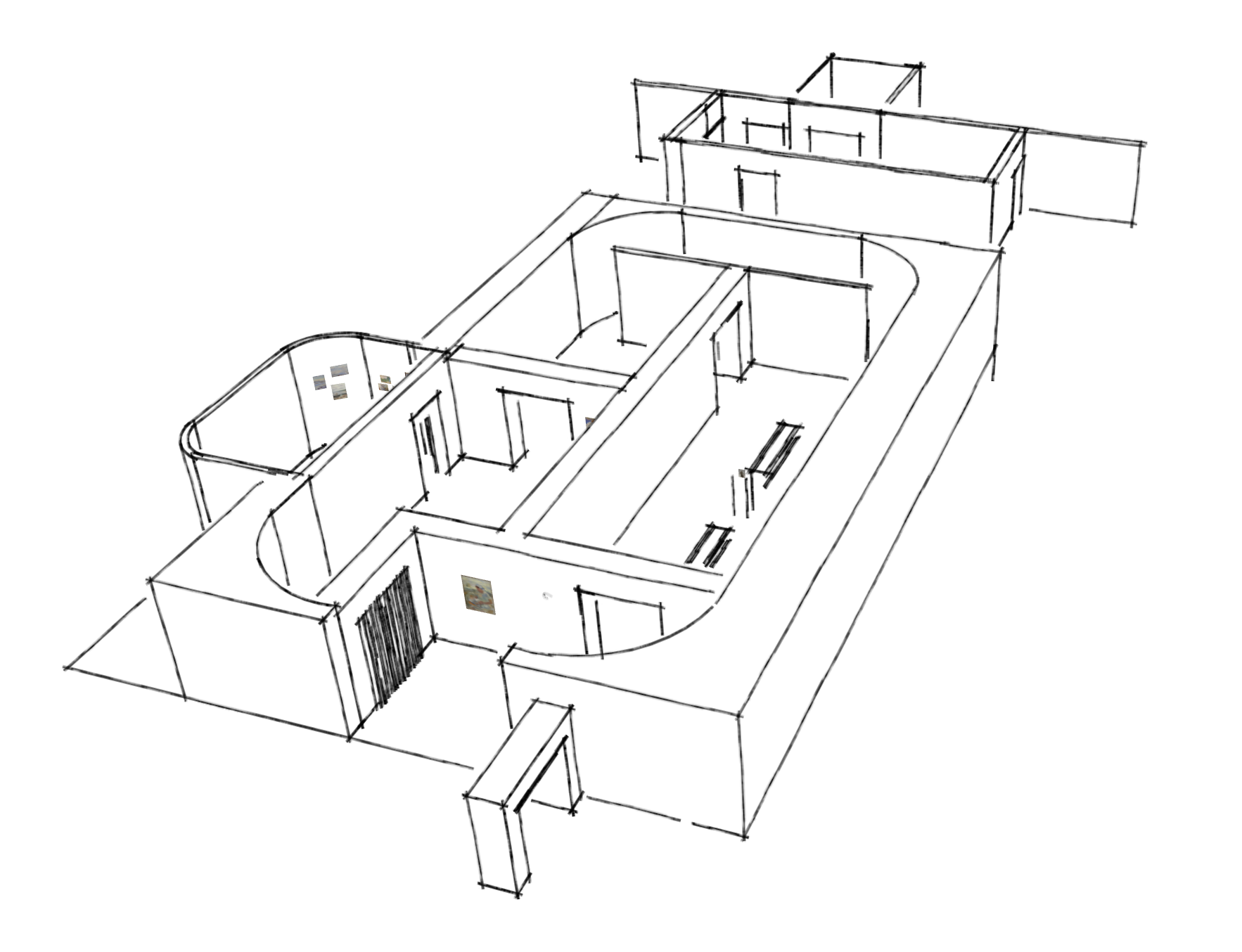


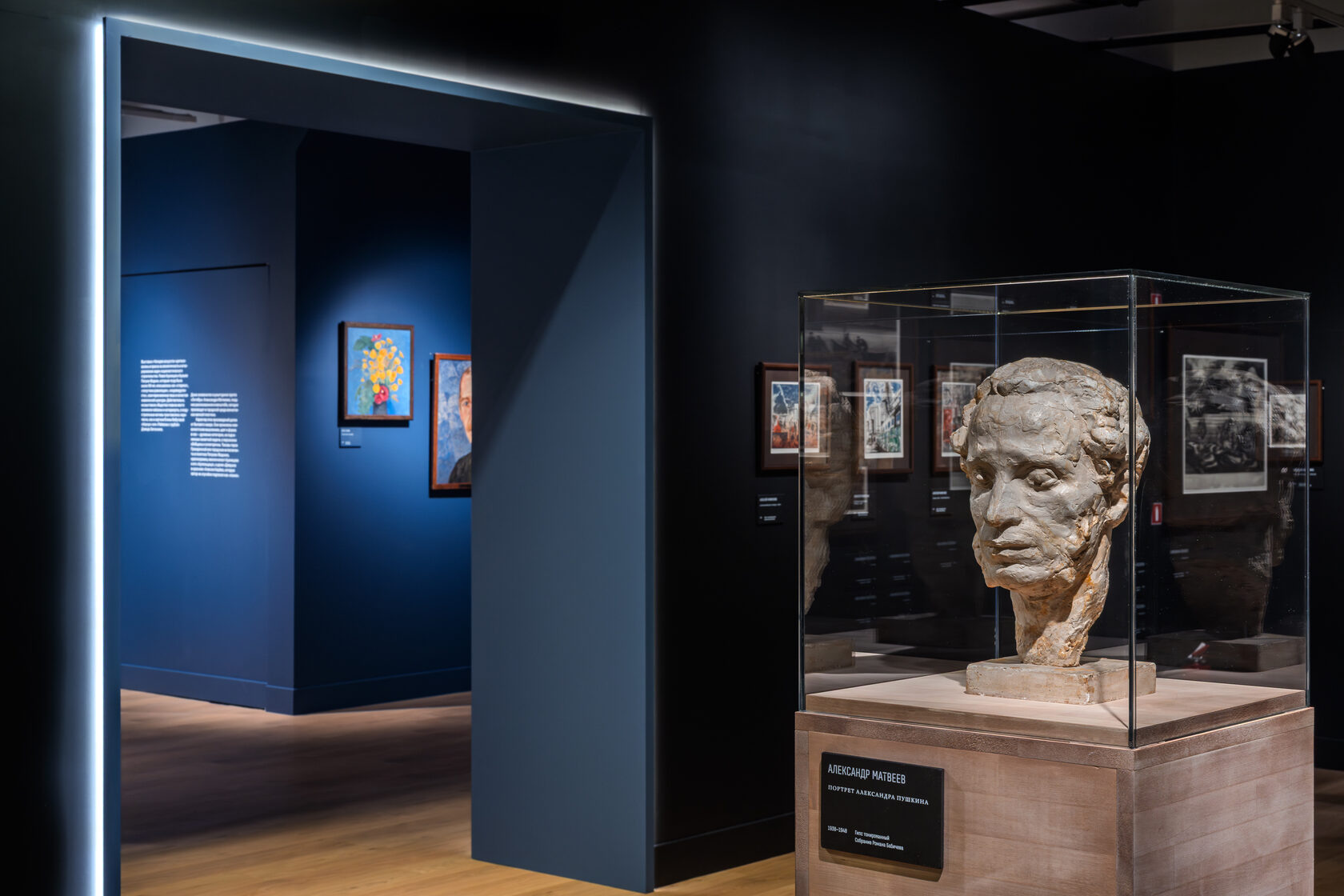
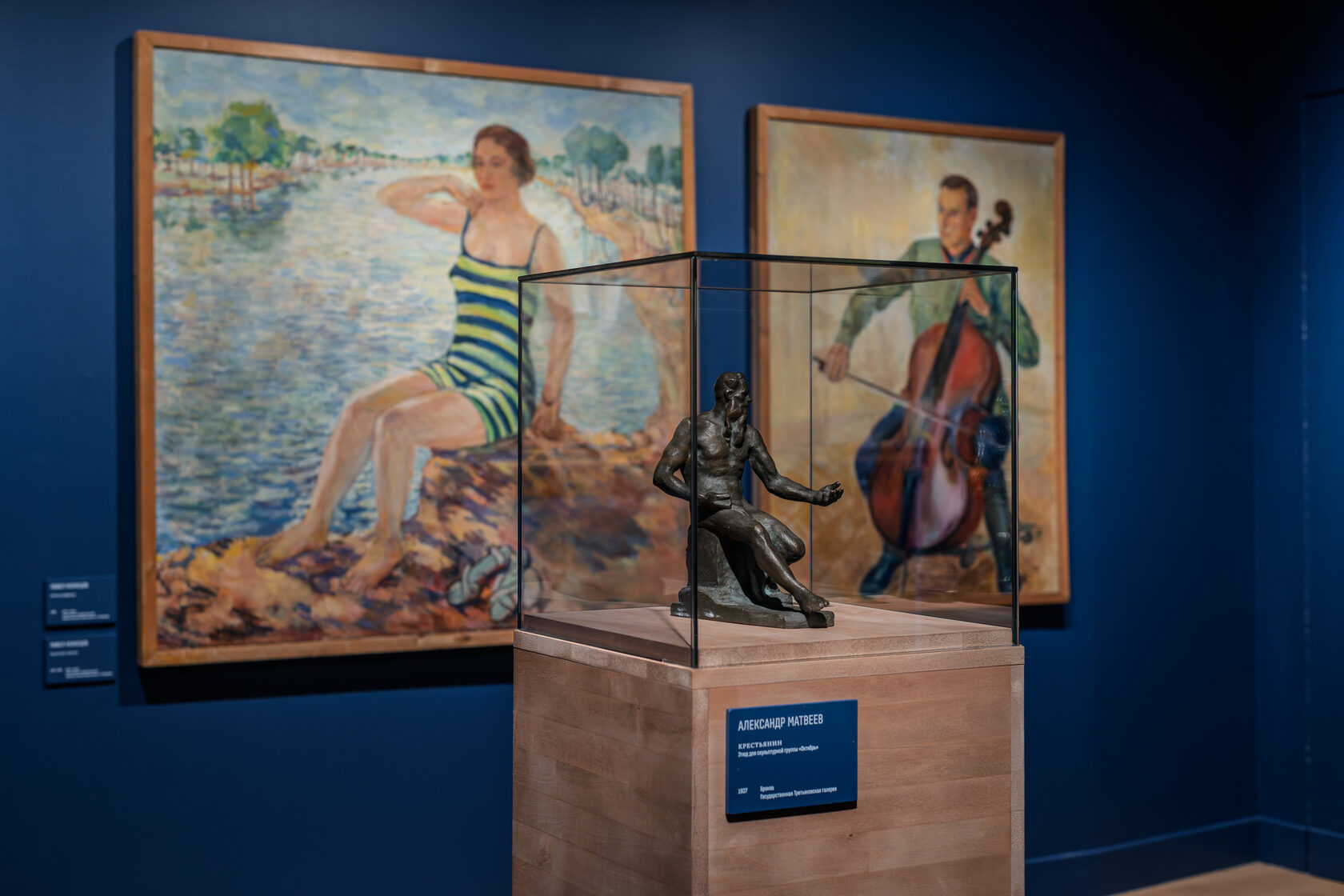
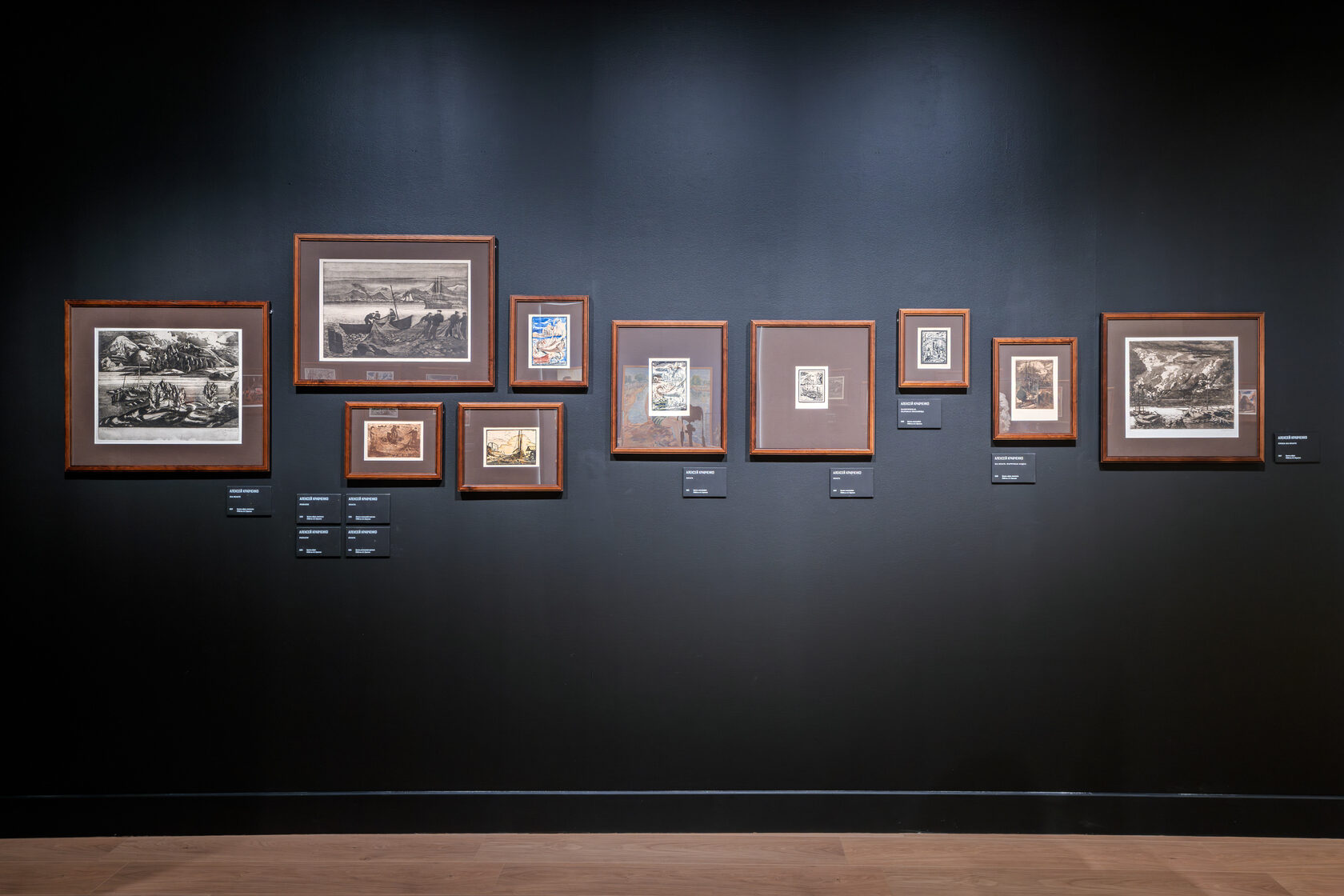
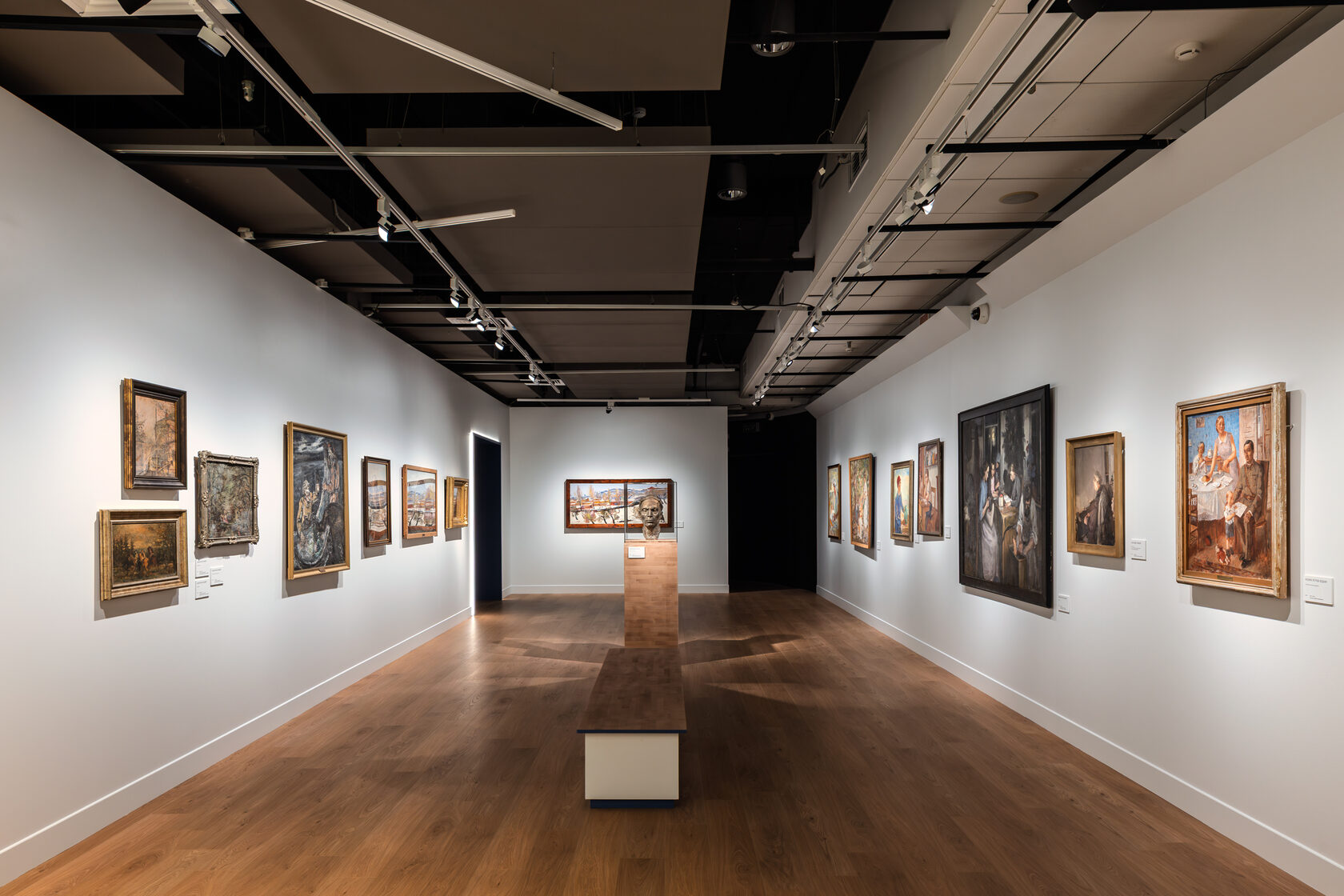
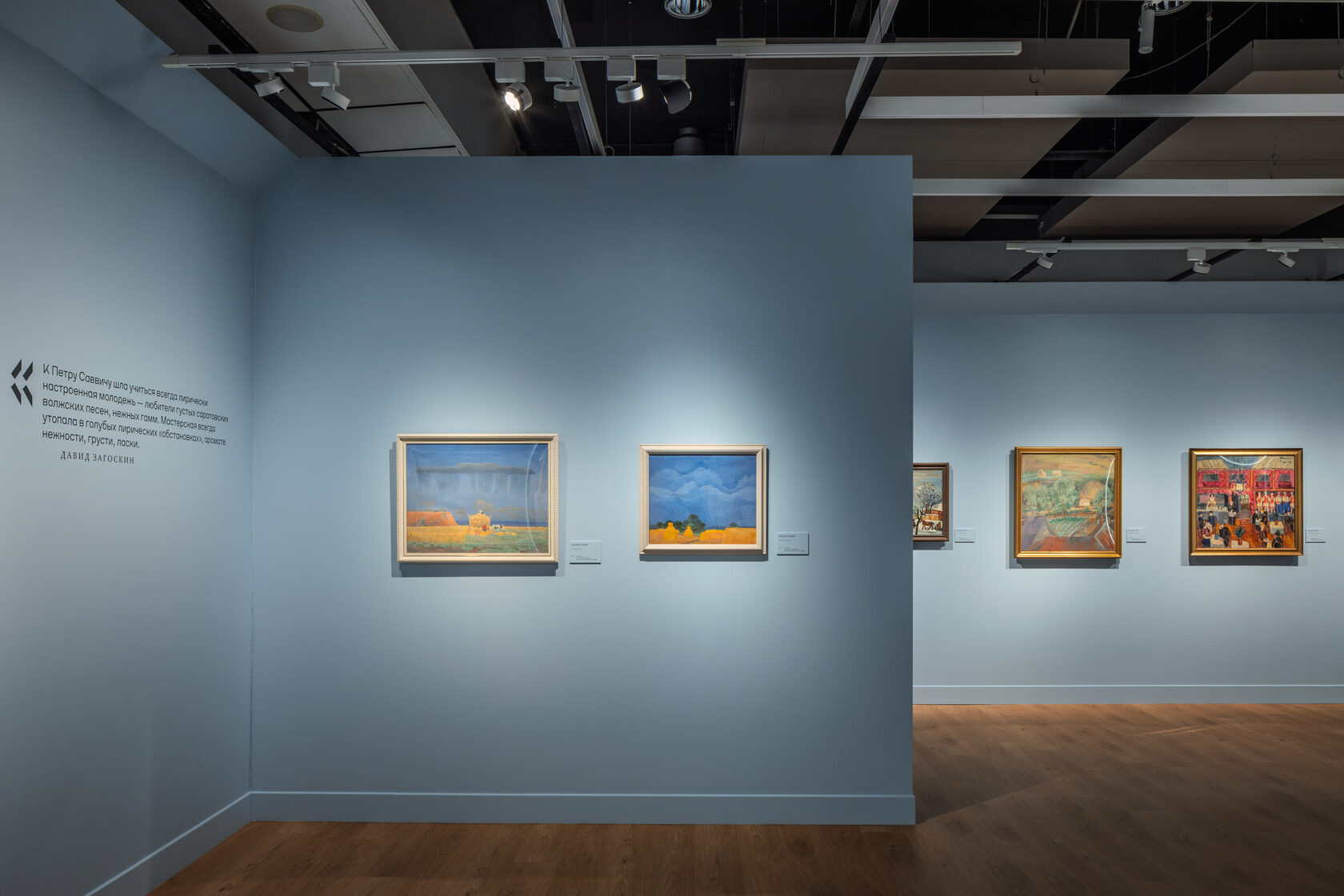
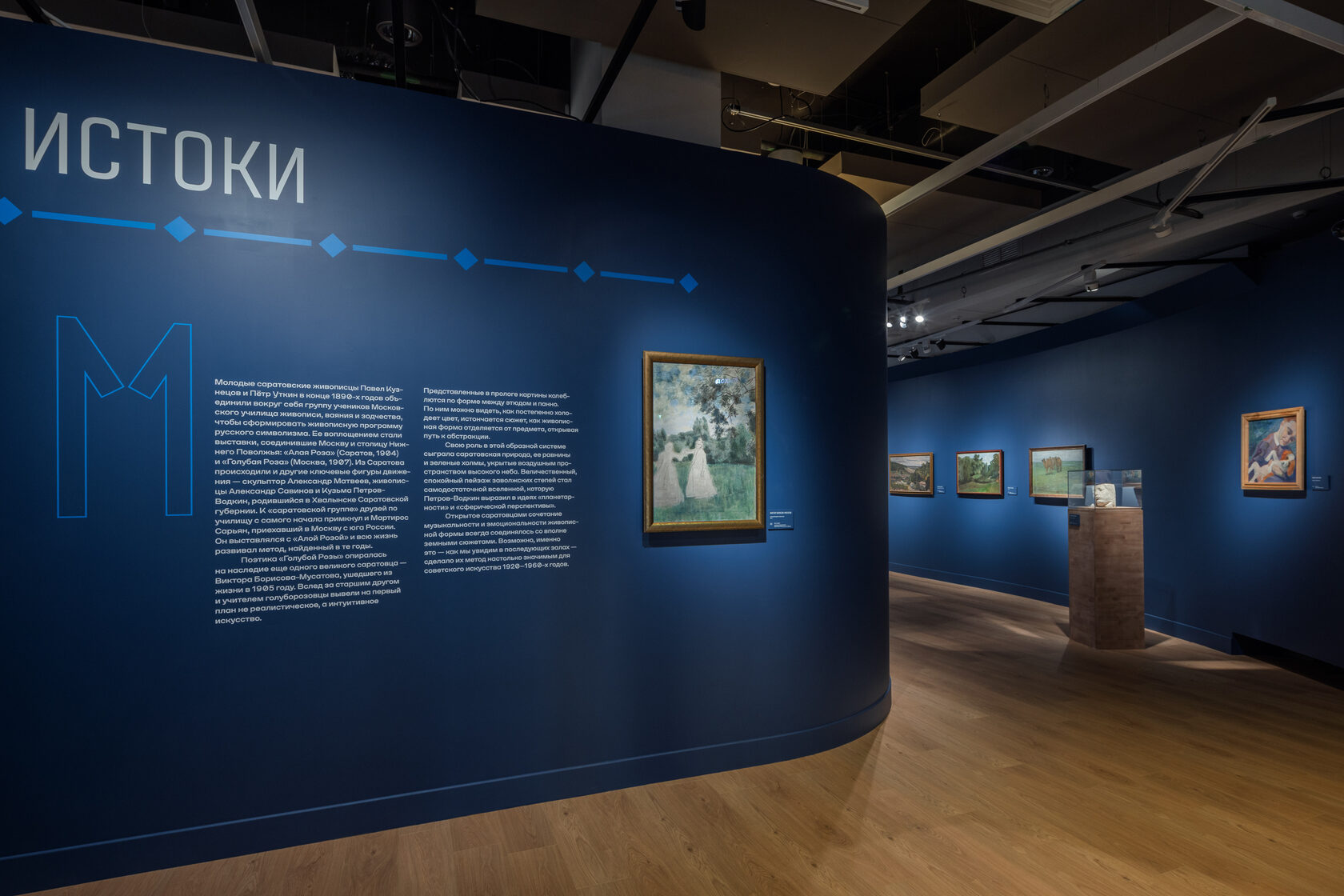
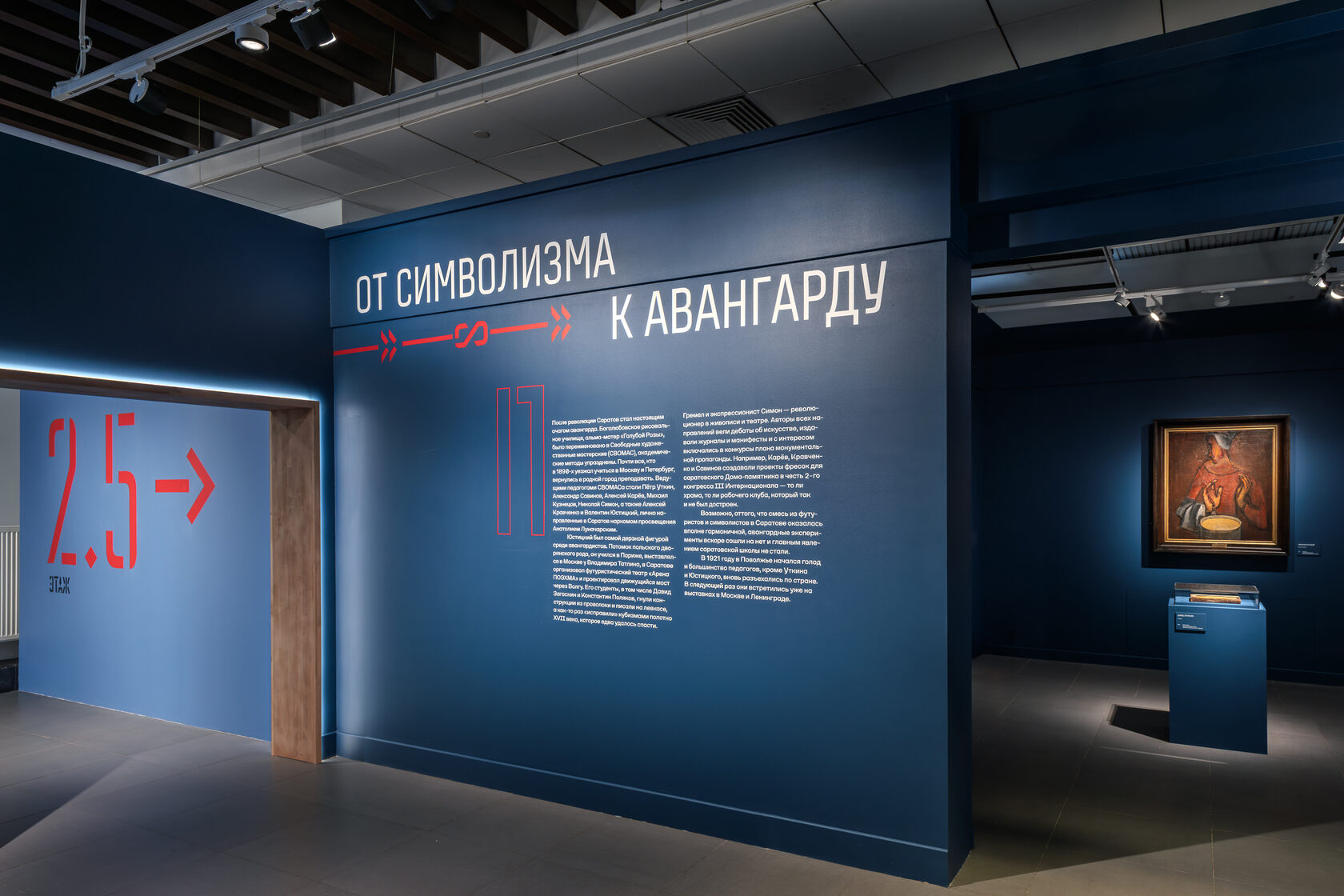
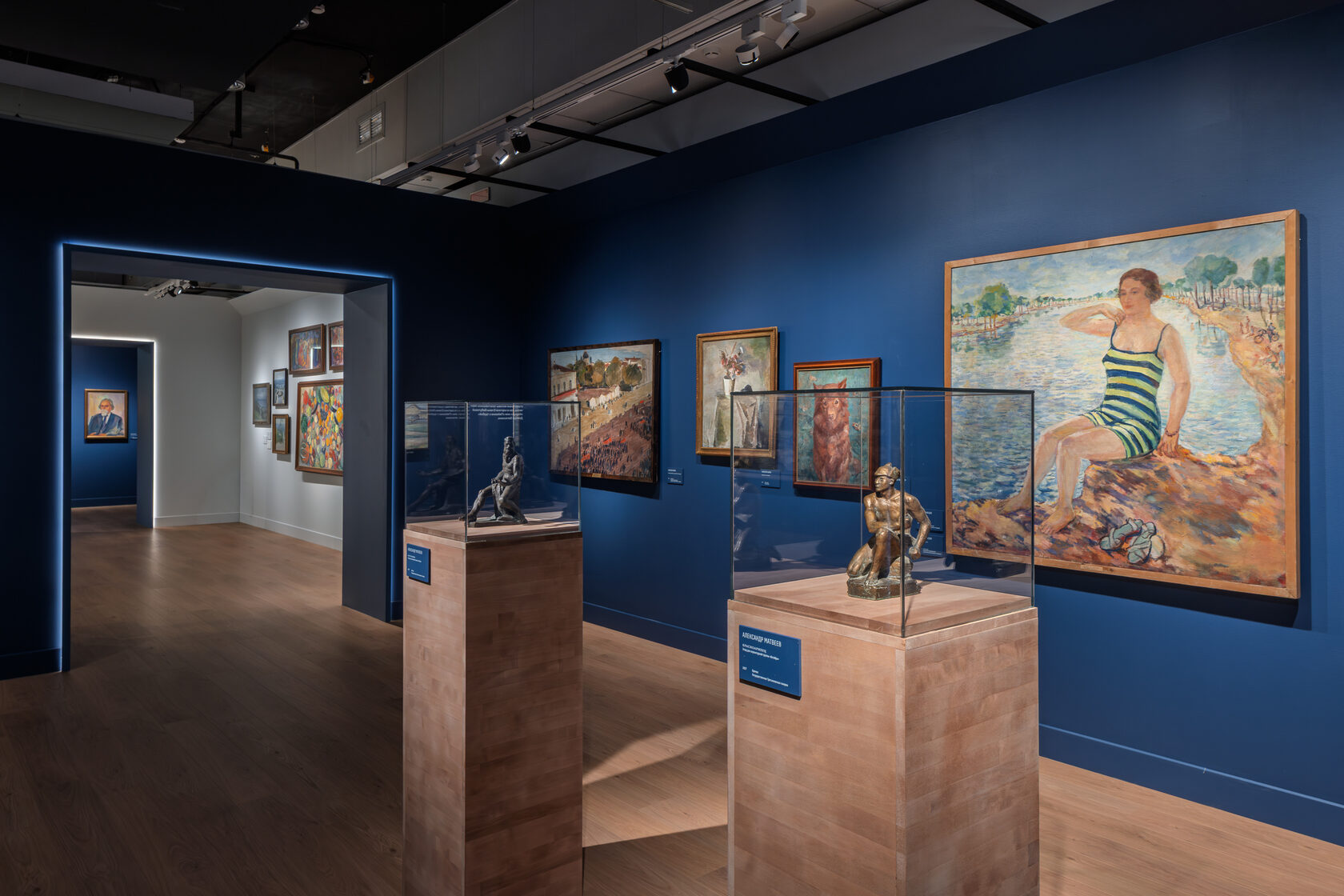
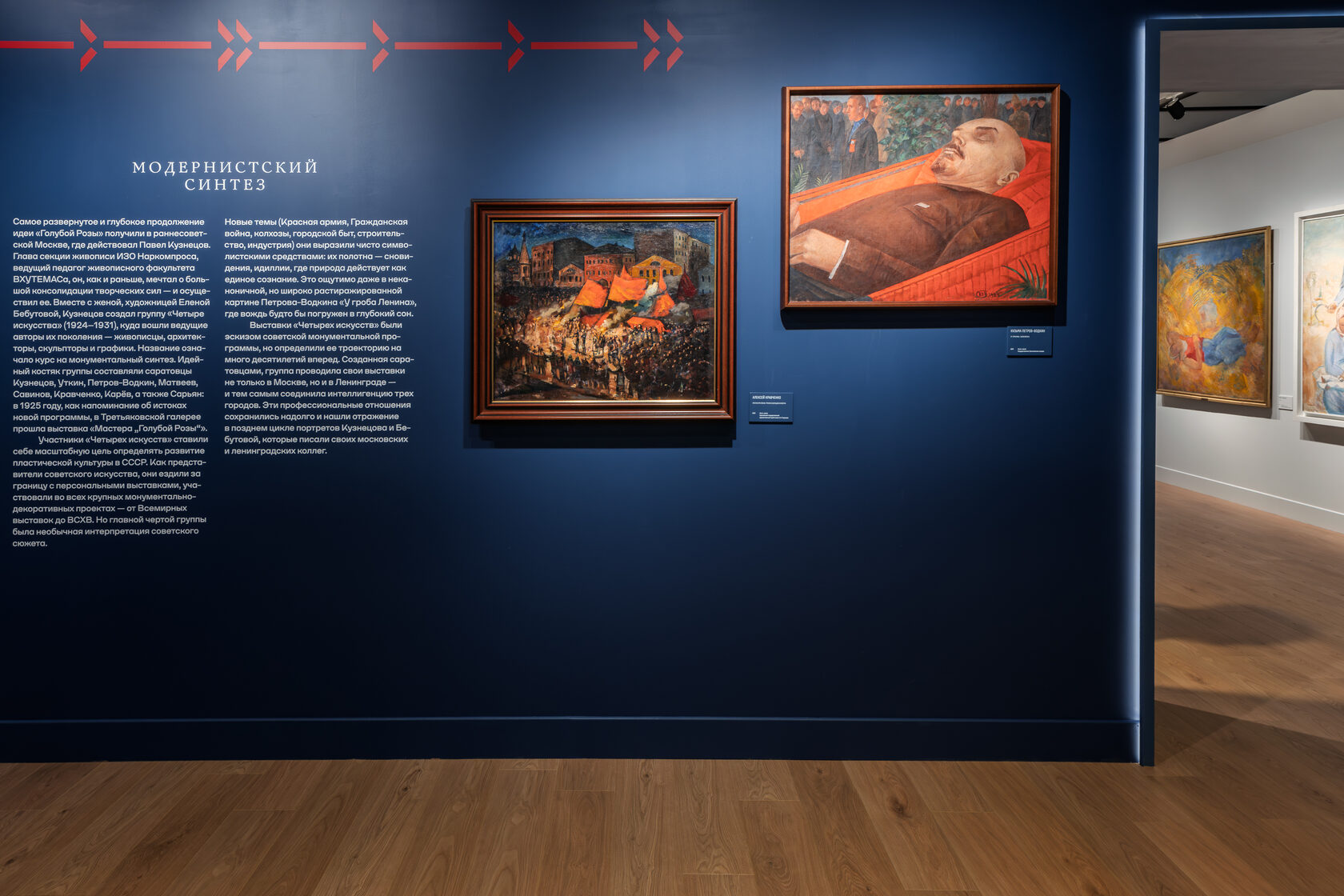
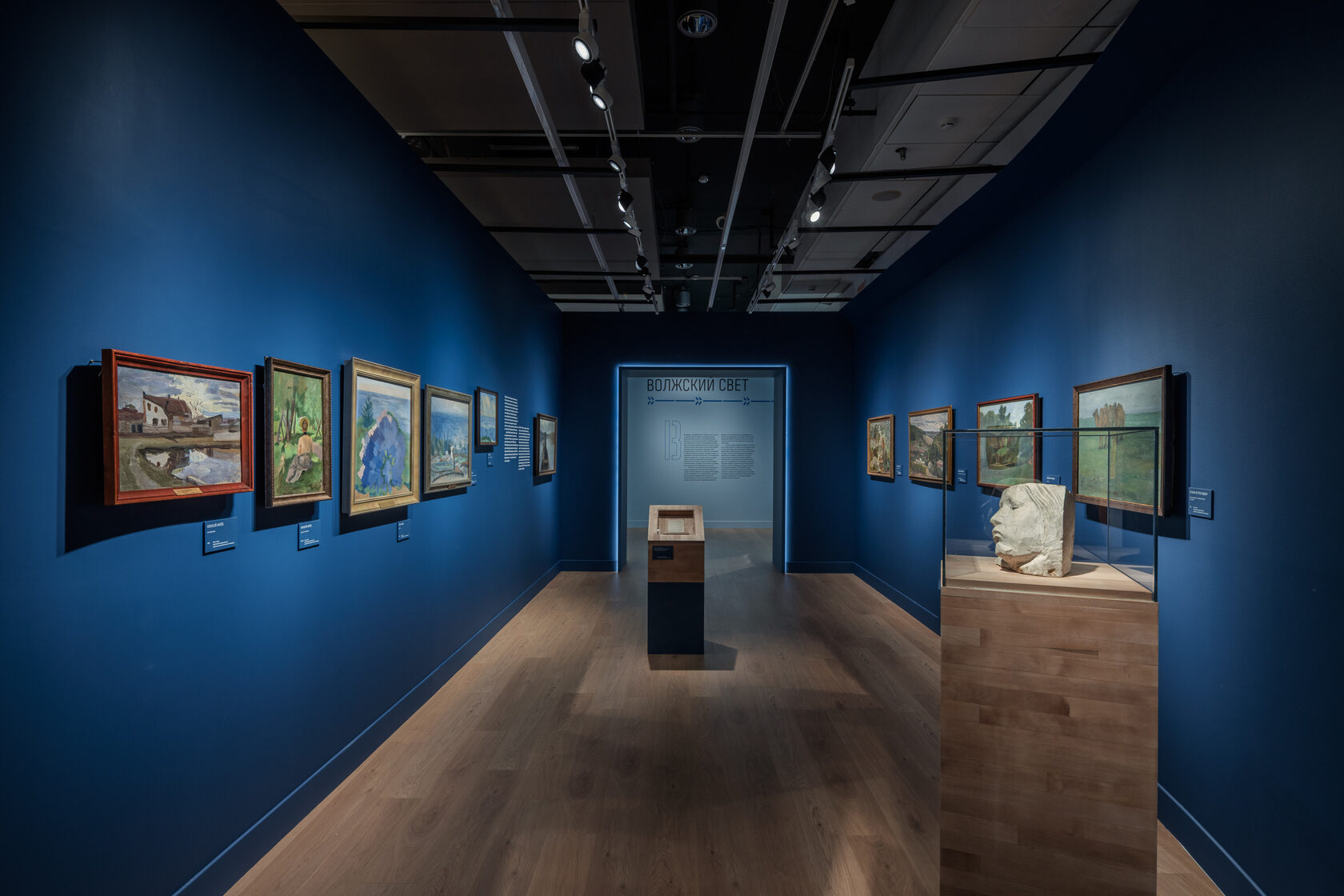
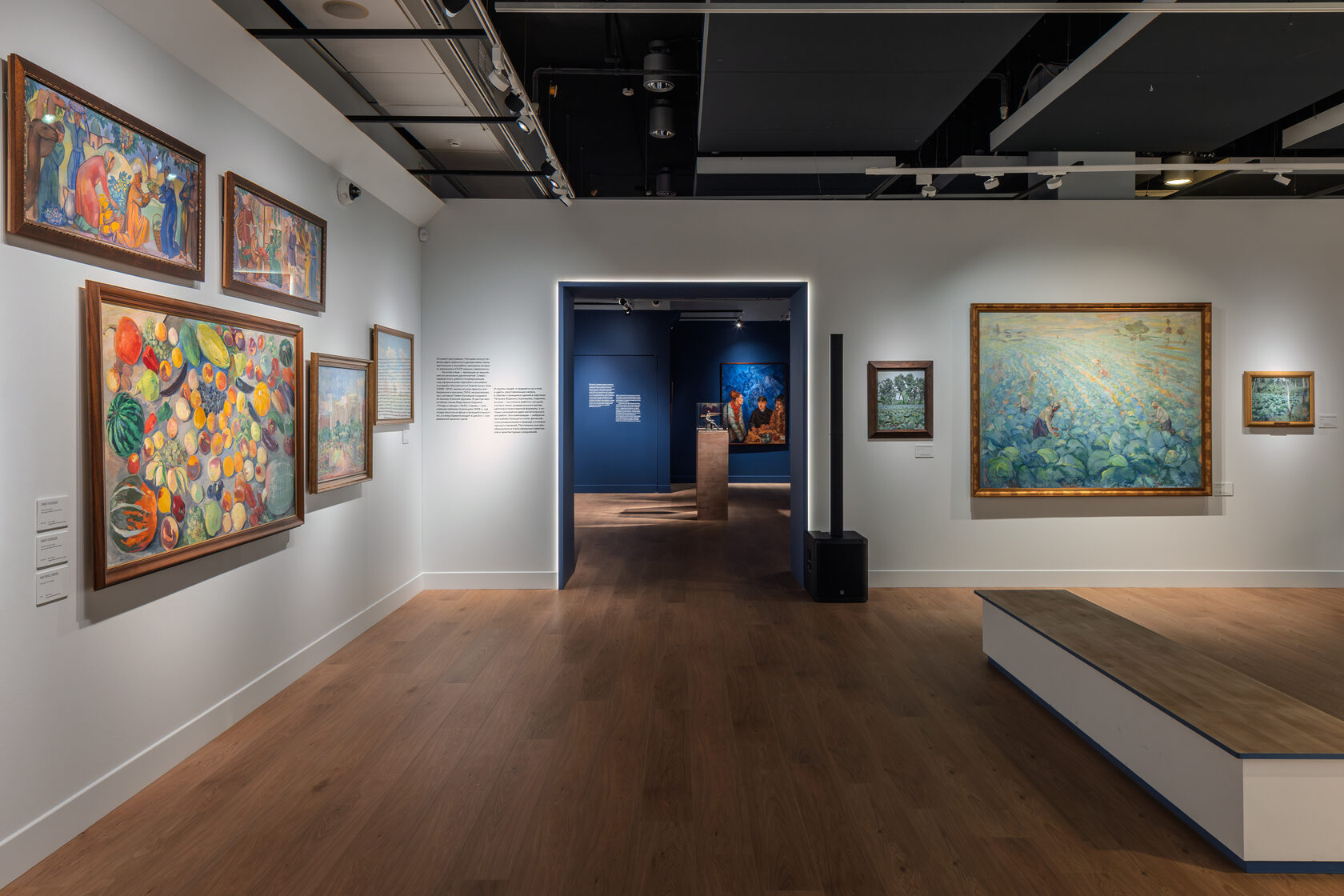
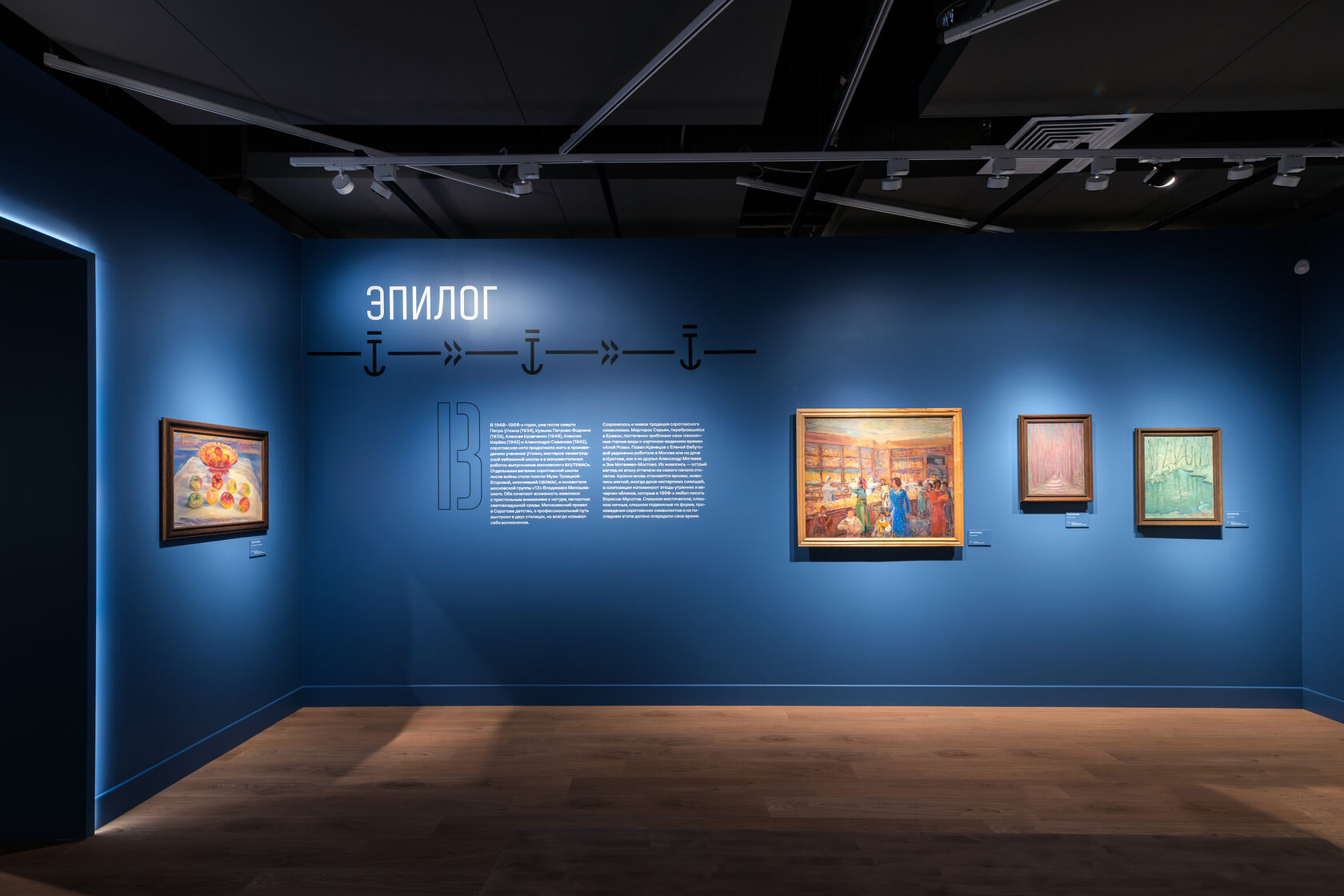
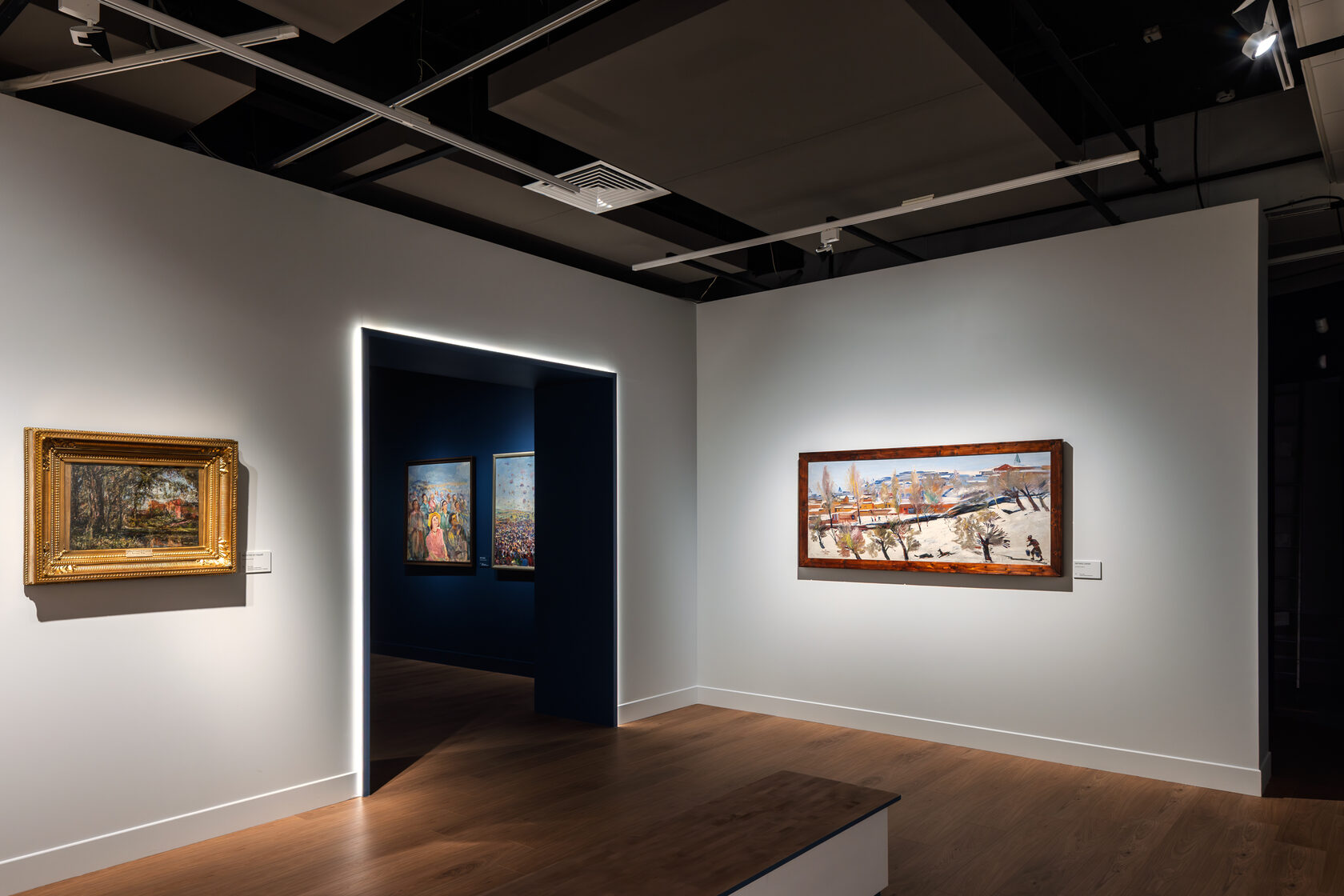
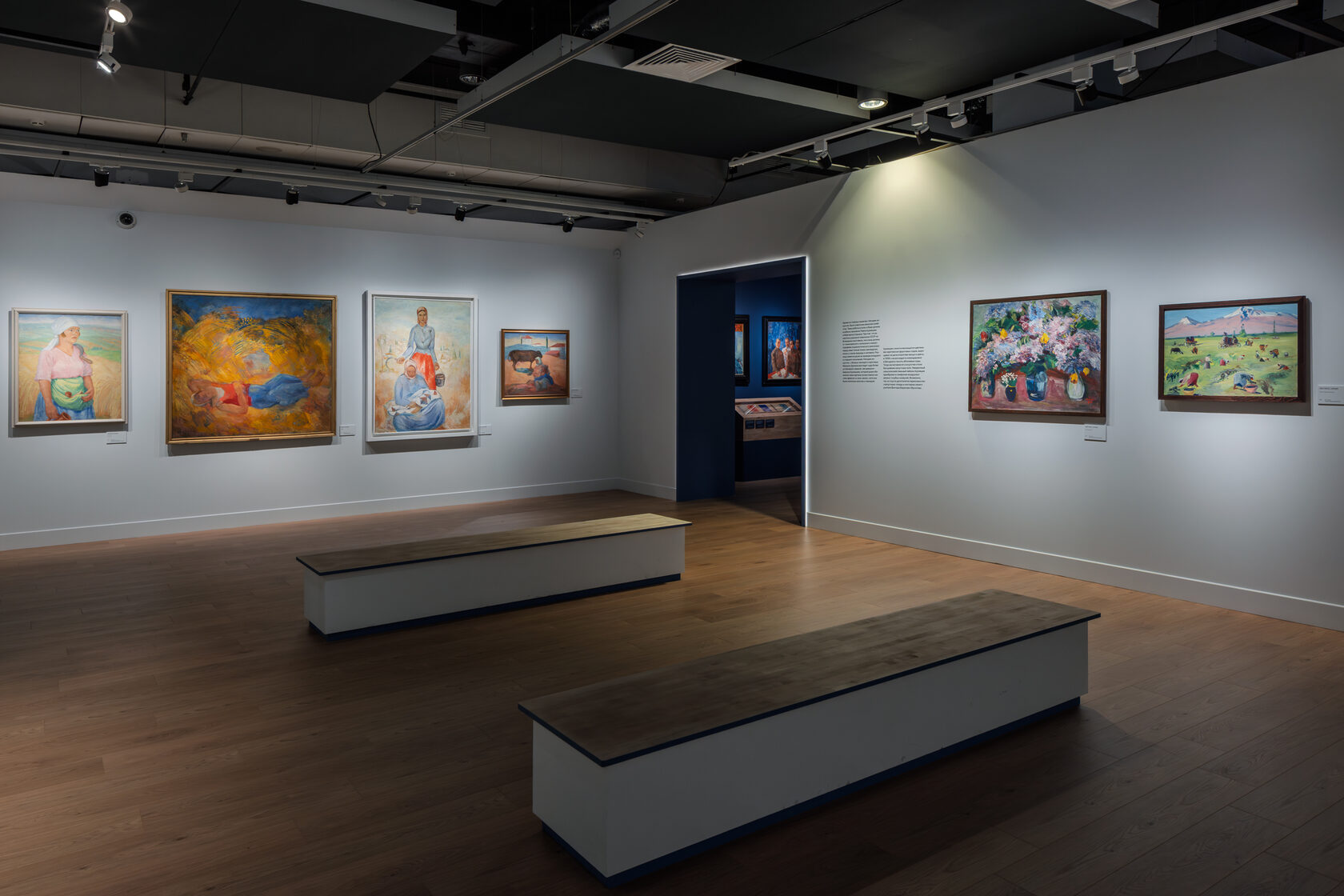
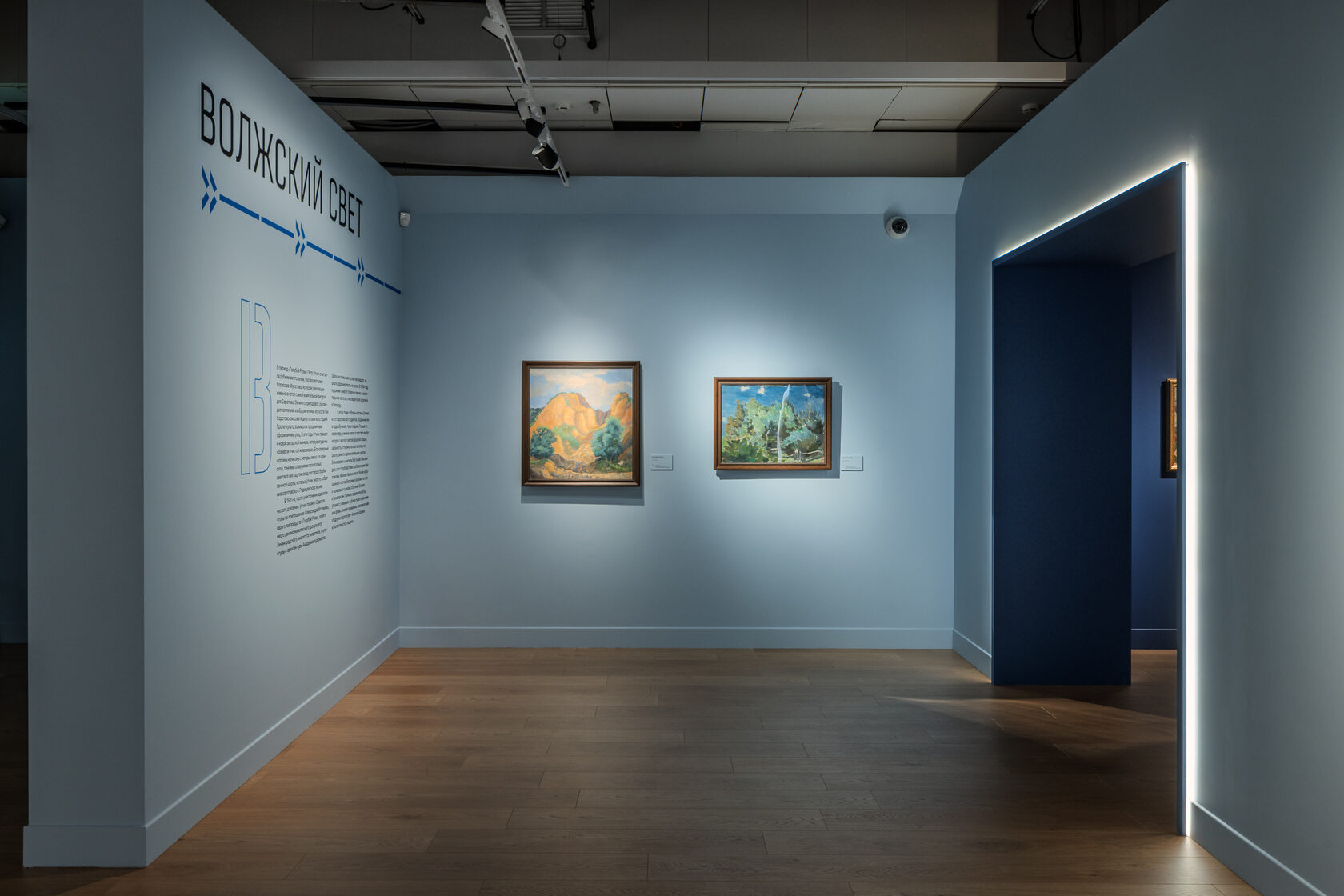
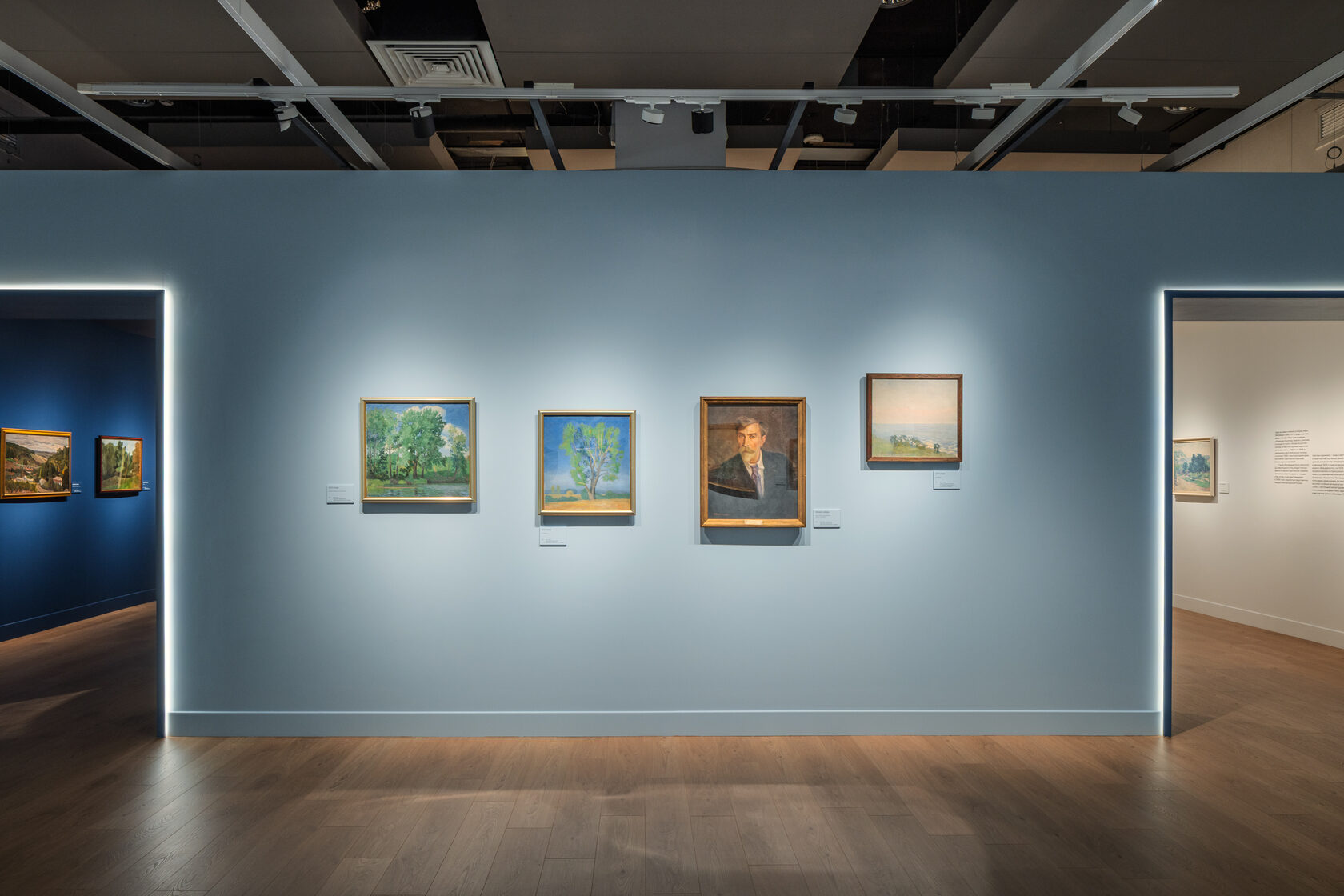
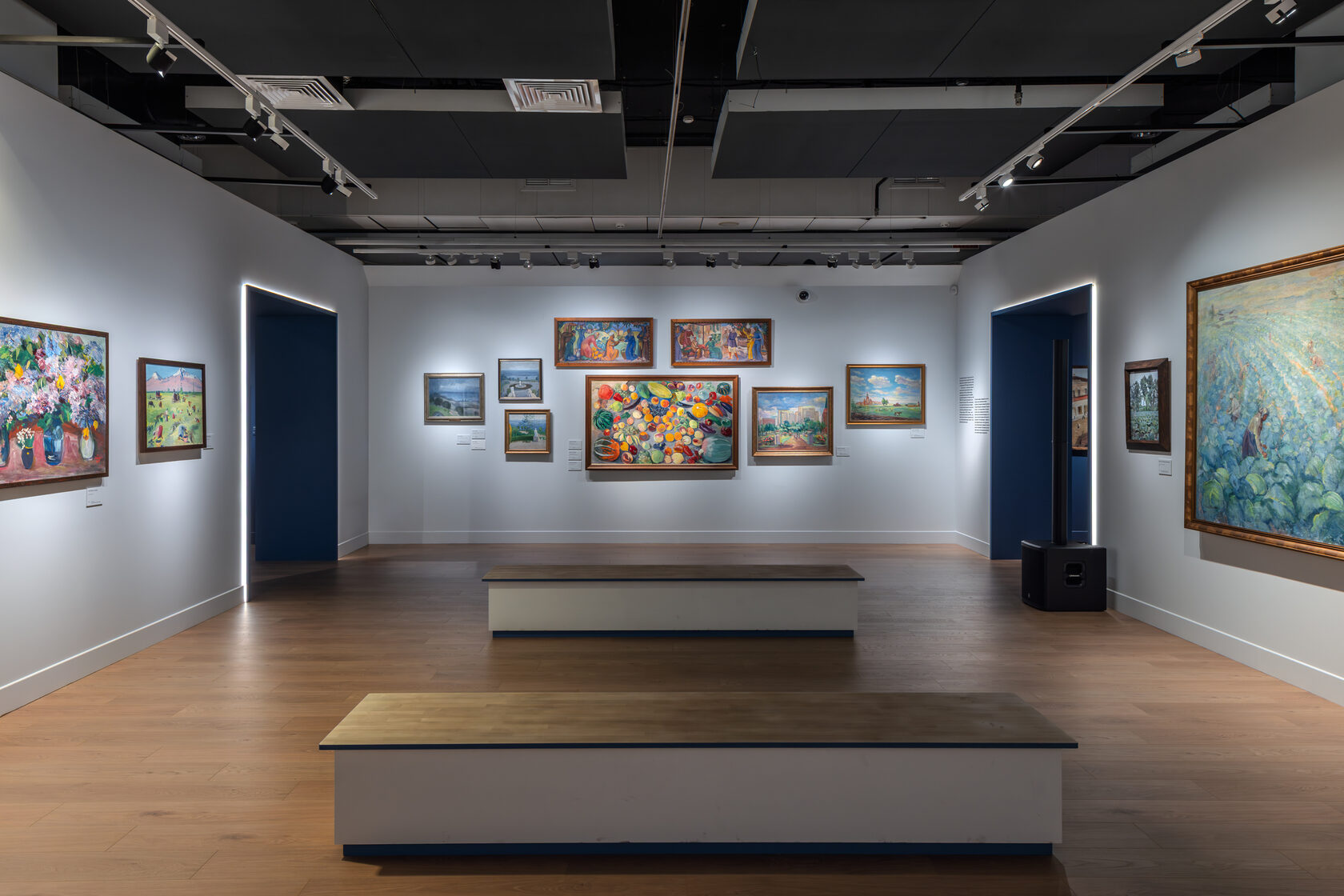
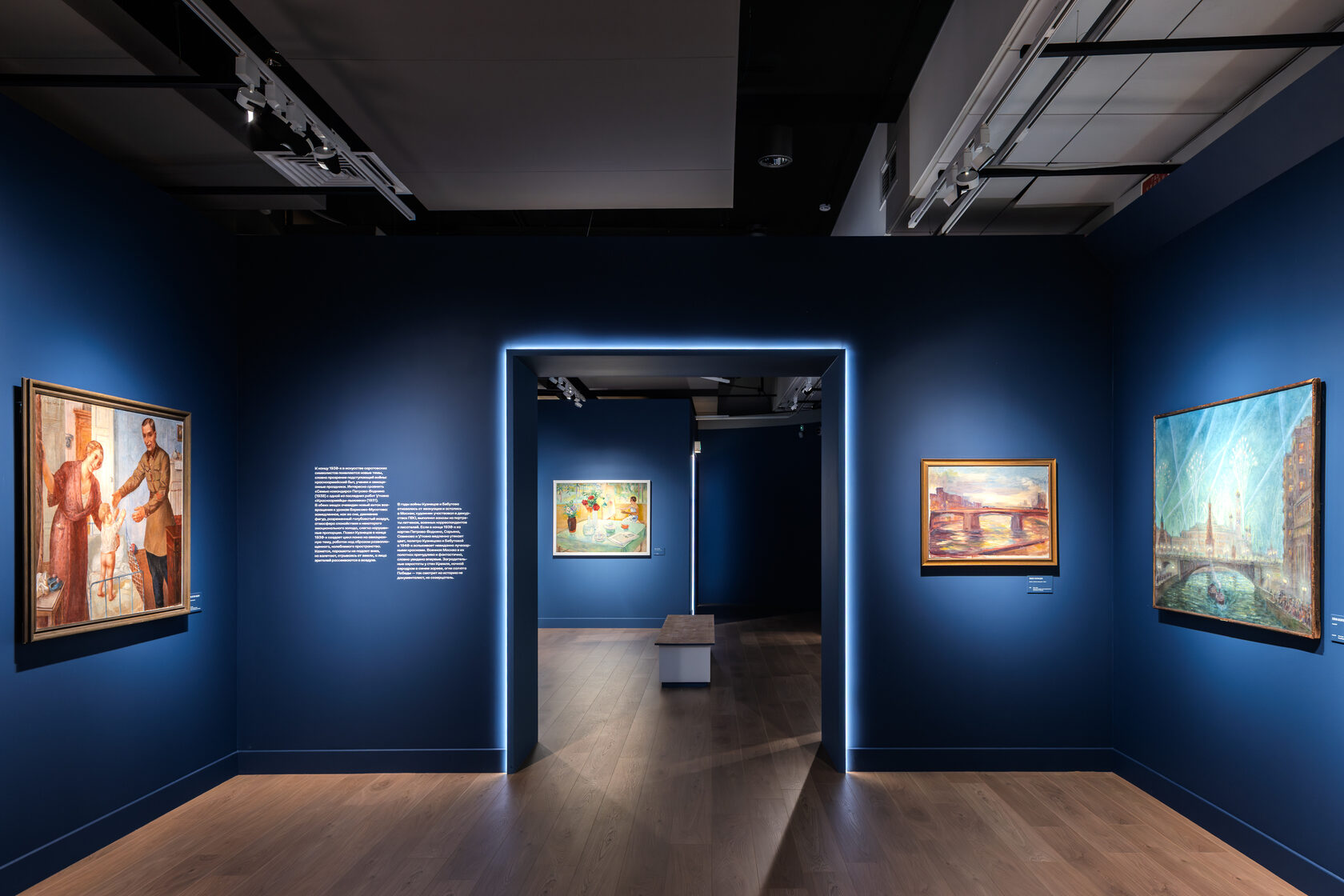
The exhibition spans five floors. As visitors move from one floor to the next, the passages evoke the atmosphere of a riverboat, taking them on a journey along the Volga, the Moskva and the Neva.

The walls are painted in the shifting colors of water, from black to pale blue. Color, sound, lighting and the layout of the walls work together to give visitors the feeling of being aboard a riverboat.