The Fashion House.
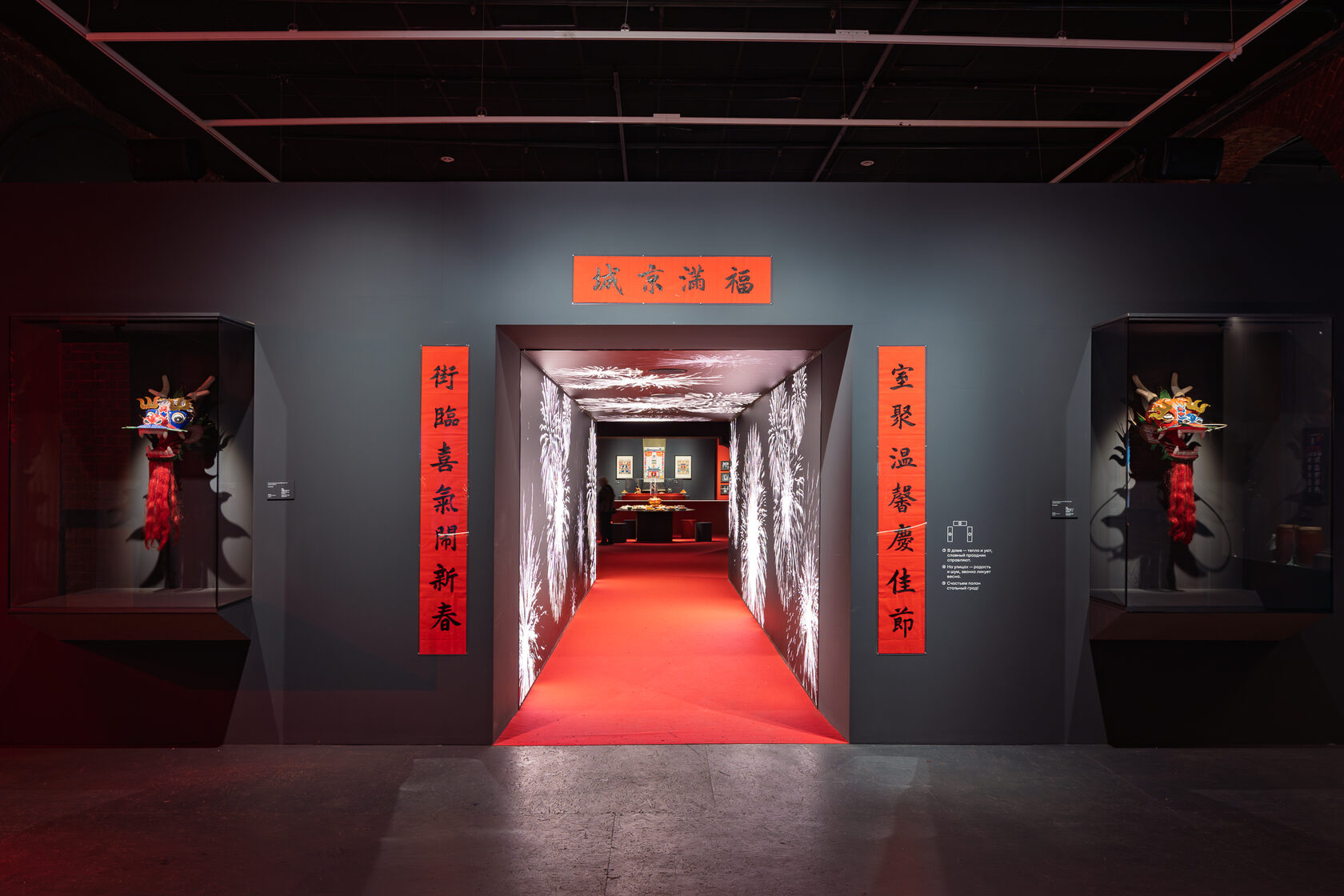
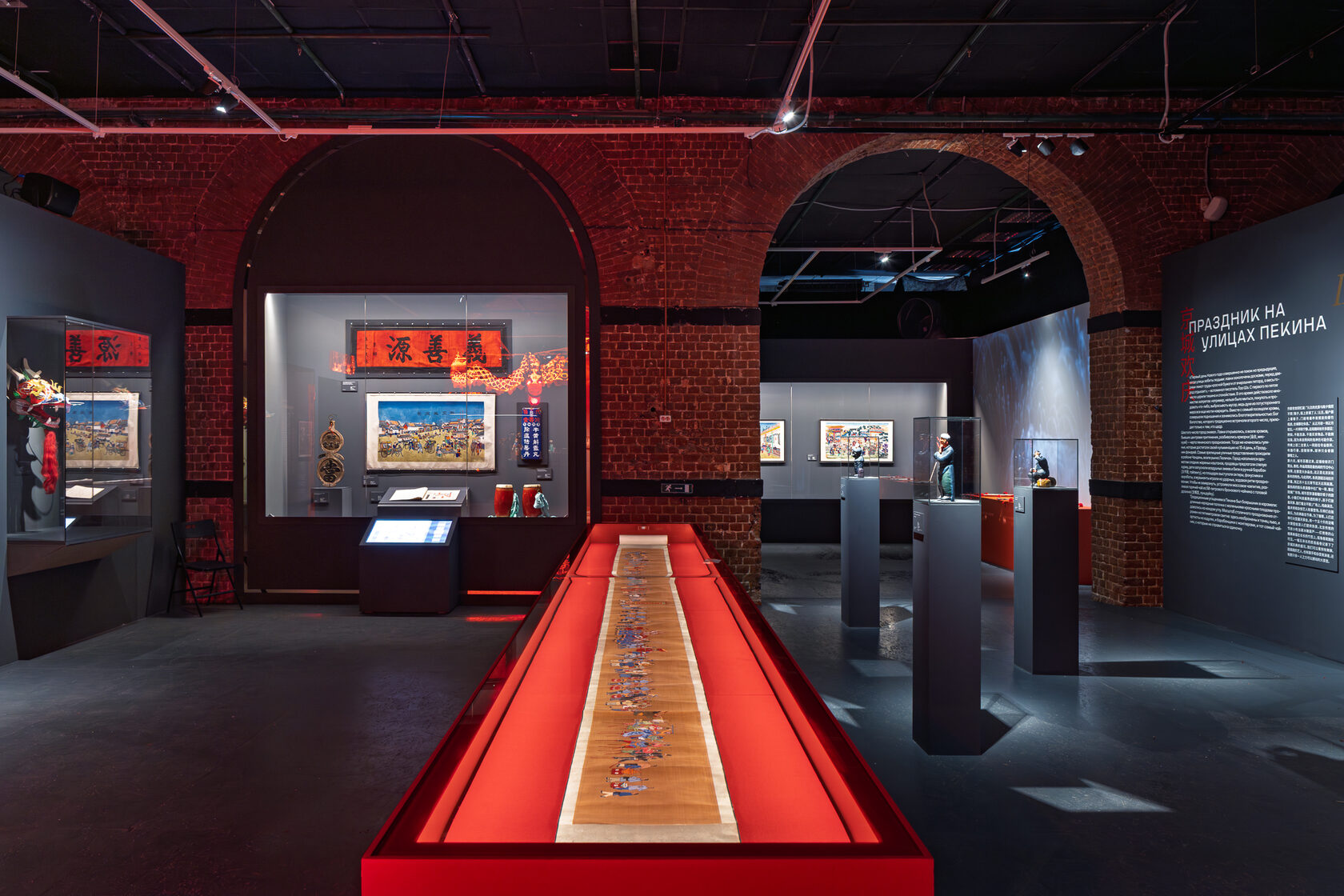
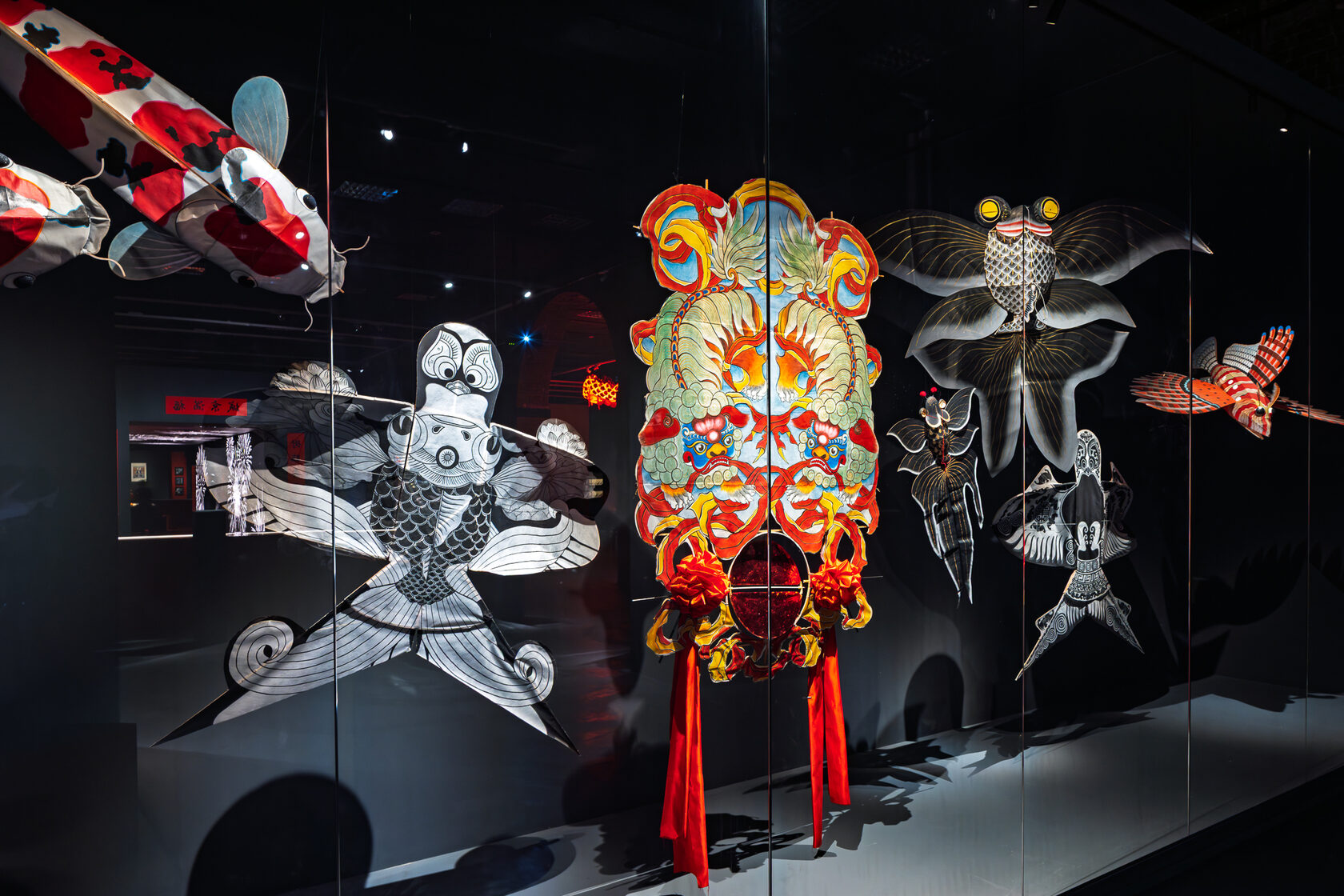
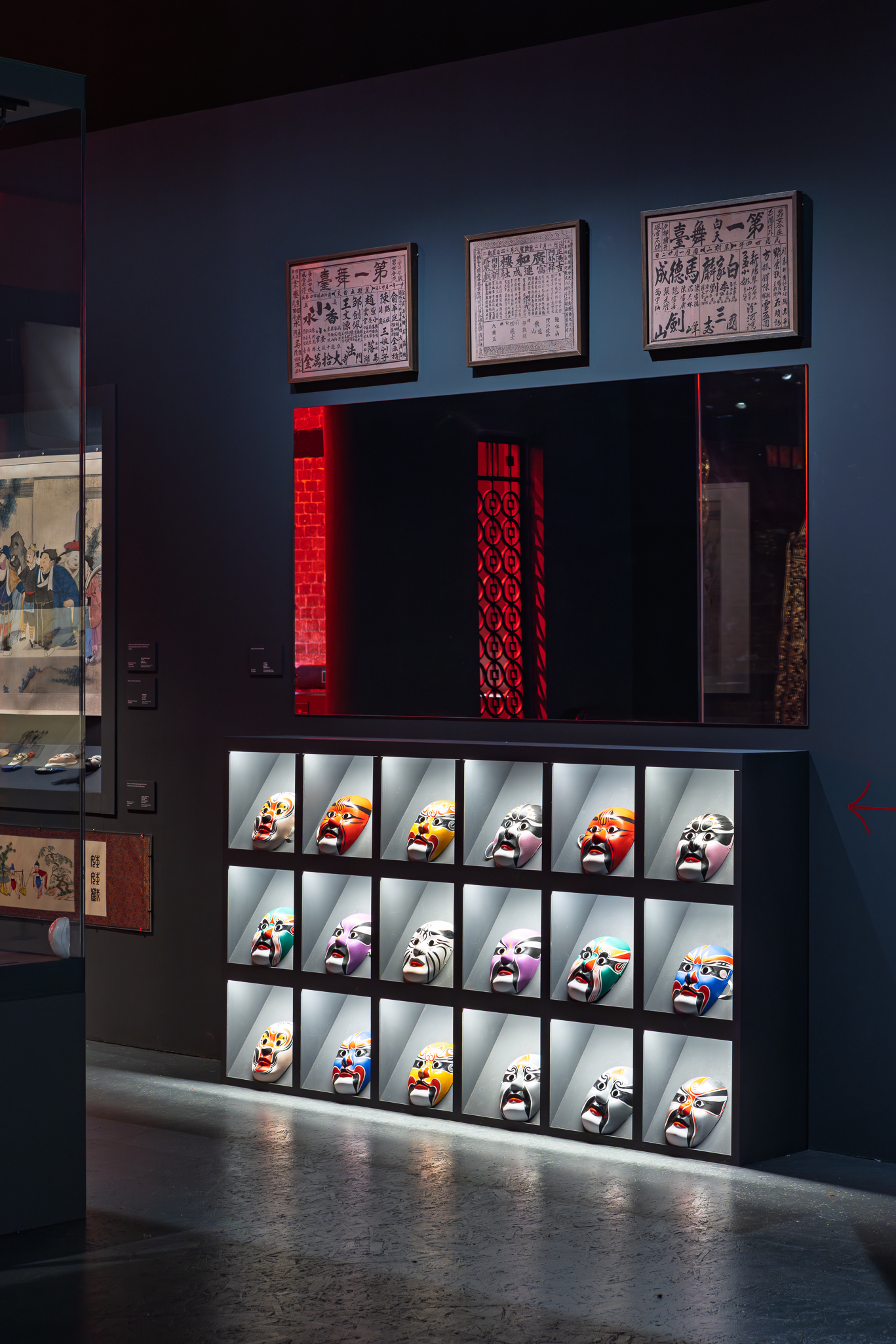
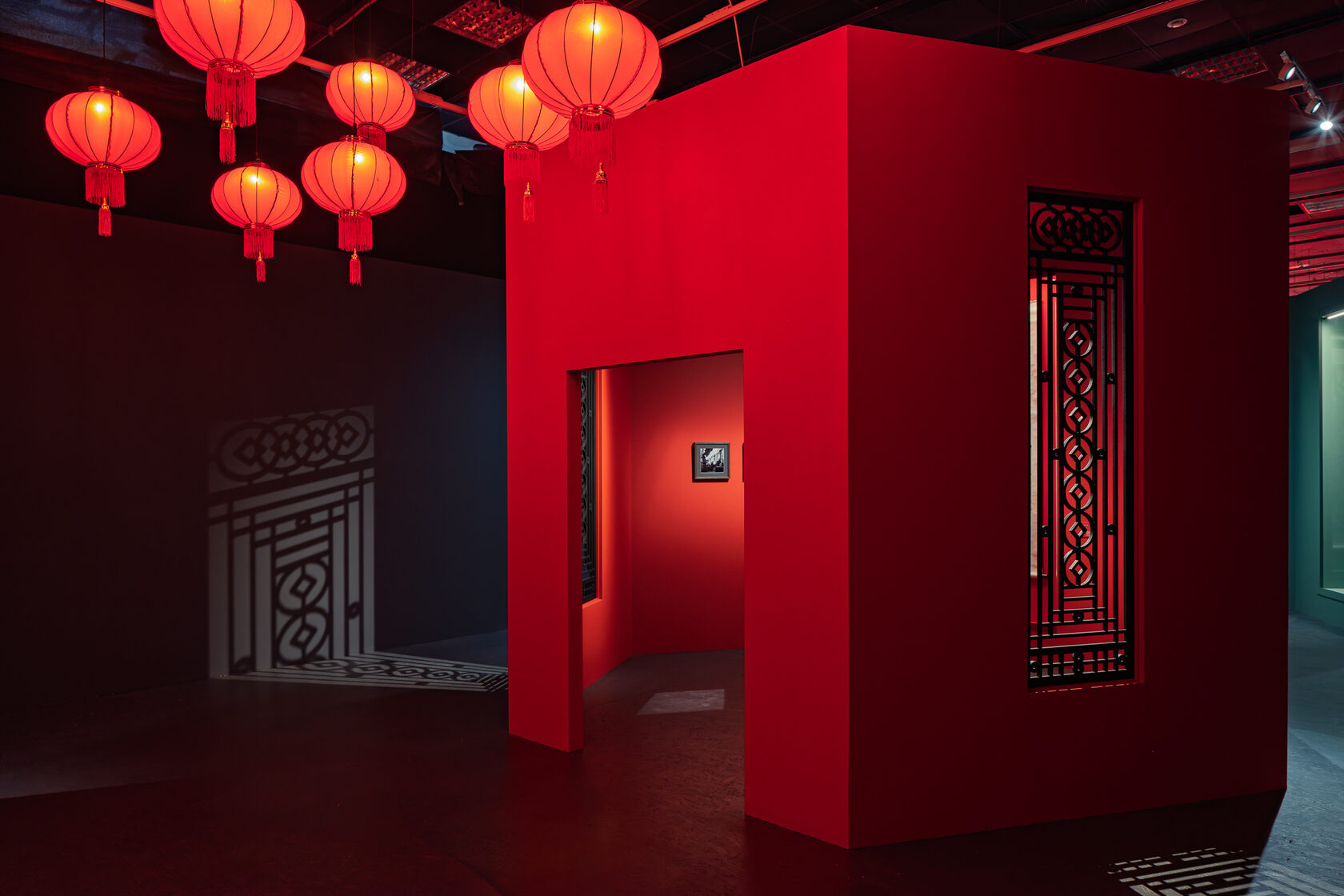
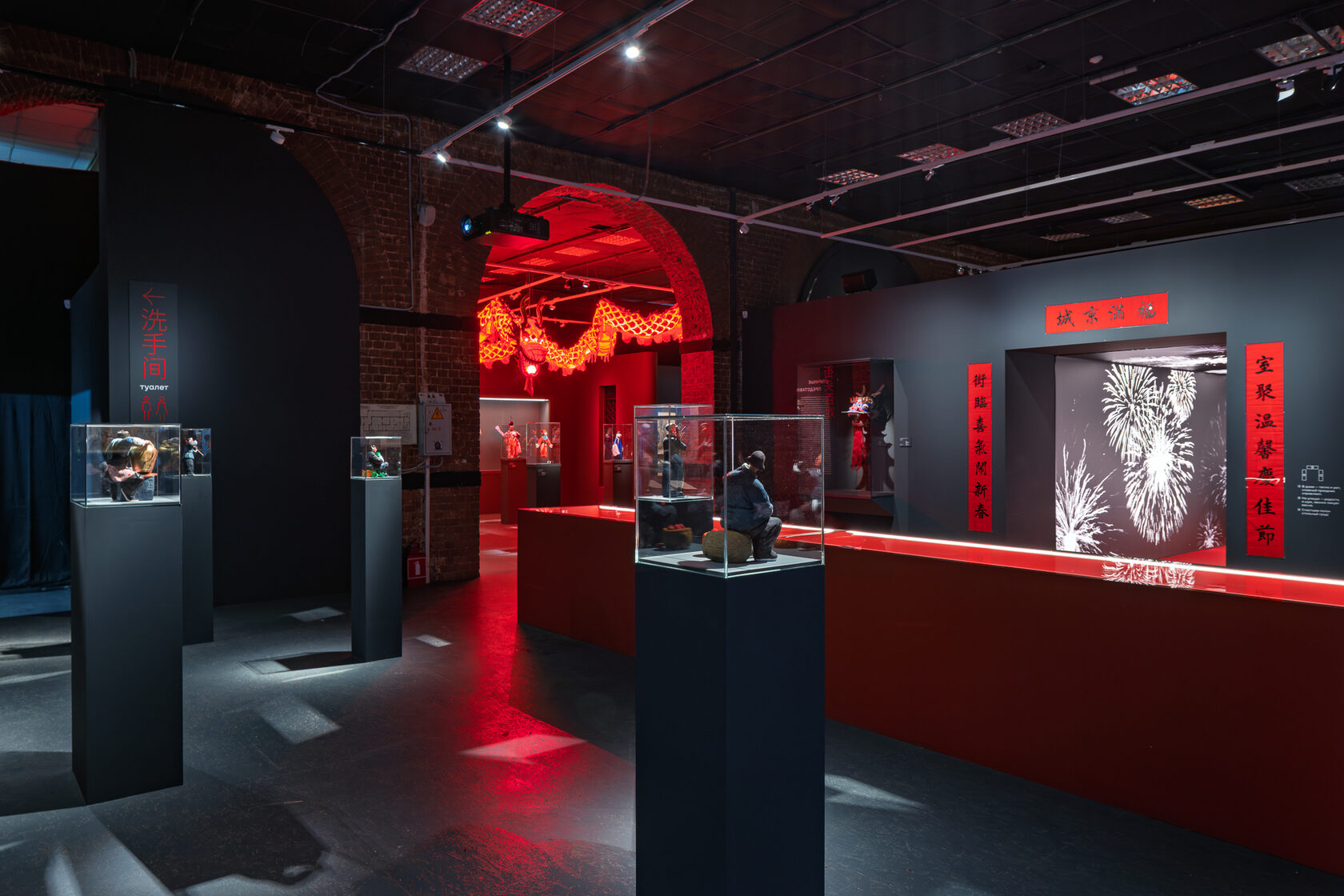
The exhibition is divided into three main sections: “Preparation,” “Celebration Begins,” and “Festivities.” It takes visitors through every stage of the Chinese New Year celebration, from cleaning the house and buying fireworks to lively street festivities and the release of lanterns. Visitors discover the origins of the twelve zodiac animals and learn how the lunisolar calendar works, what laba porridge is and why its preparation marks the beginning of the festive season in Beijing, how a traditional Chinese home is decorated, what an ancestral altar is, and why paper money is burned there on New Year’s Eve. The exhibition also explores festive parades featuring lions and dragons, explains why swallow-shaped kites fill the sky and why the Taipinggu drum is beaten on the eve of the Lantern Festival, which brings the celebrations to a close, examines the role of Peking Opera, and reveals why candied hawthorn berries remain one of Beijing’s favorite New Year treats.
Curator: Ksenia Guseva
Curator: Ksenia Guseva
museum: The Museum of Moscow
area: 2000 m2
exhibits: 1000 pcs
types of exhibits: paintings, graphics, textile, books, photography, video.
area: 2000 m2
exhibits: 1000 pcs
types of exhibits: paintings, graphics, textile, books, photography, video.
exhibition architecture
The Industry of Looks
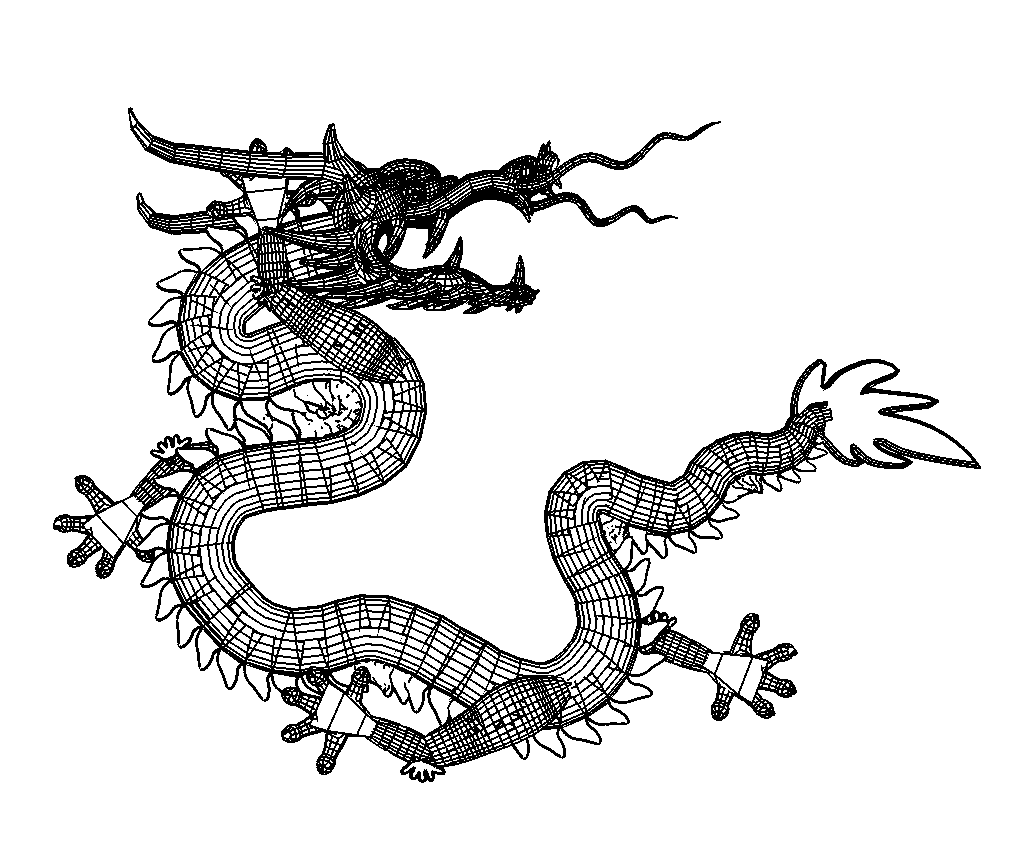
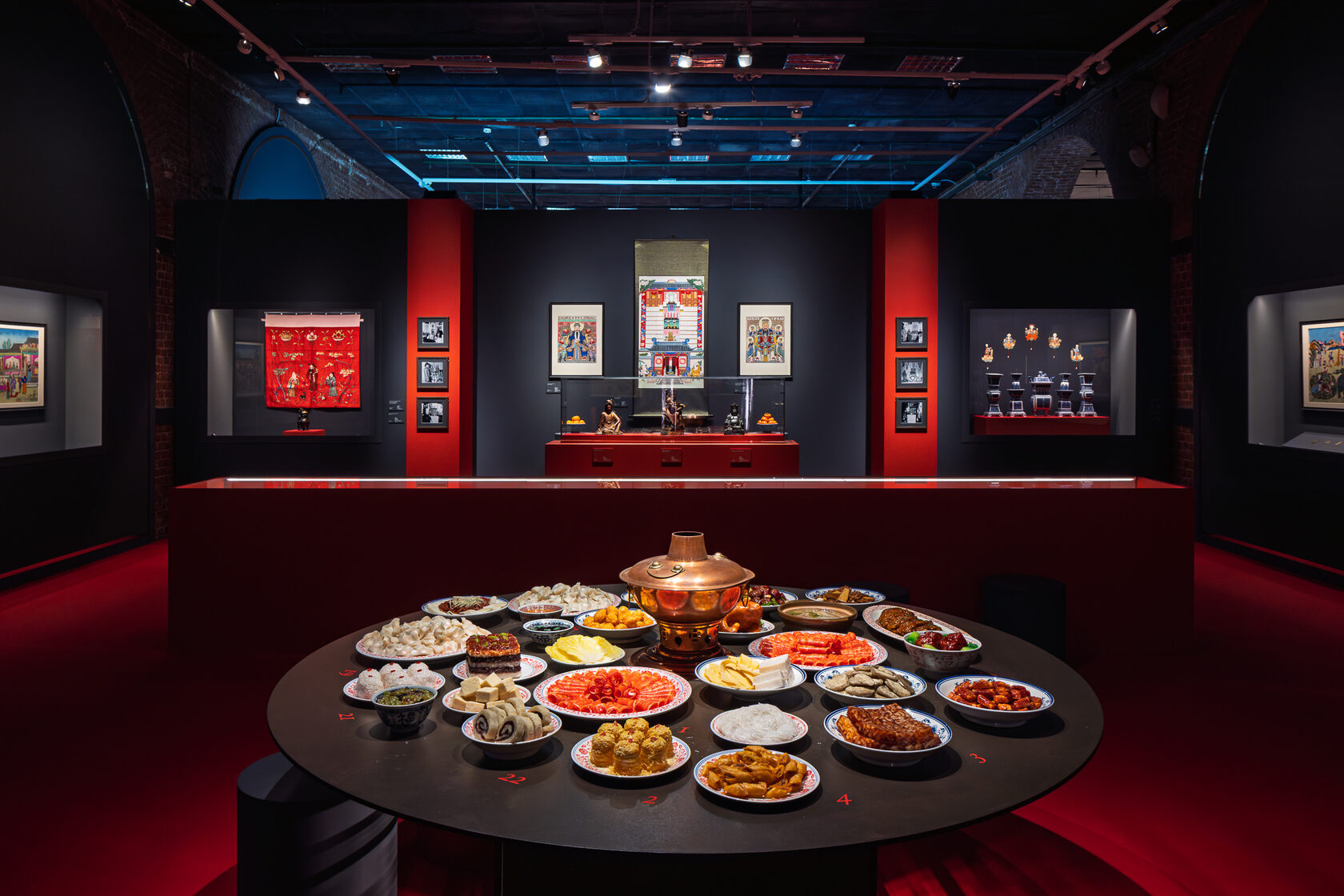
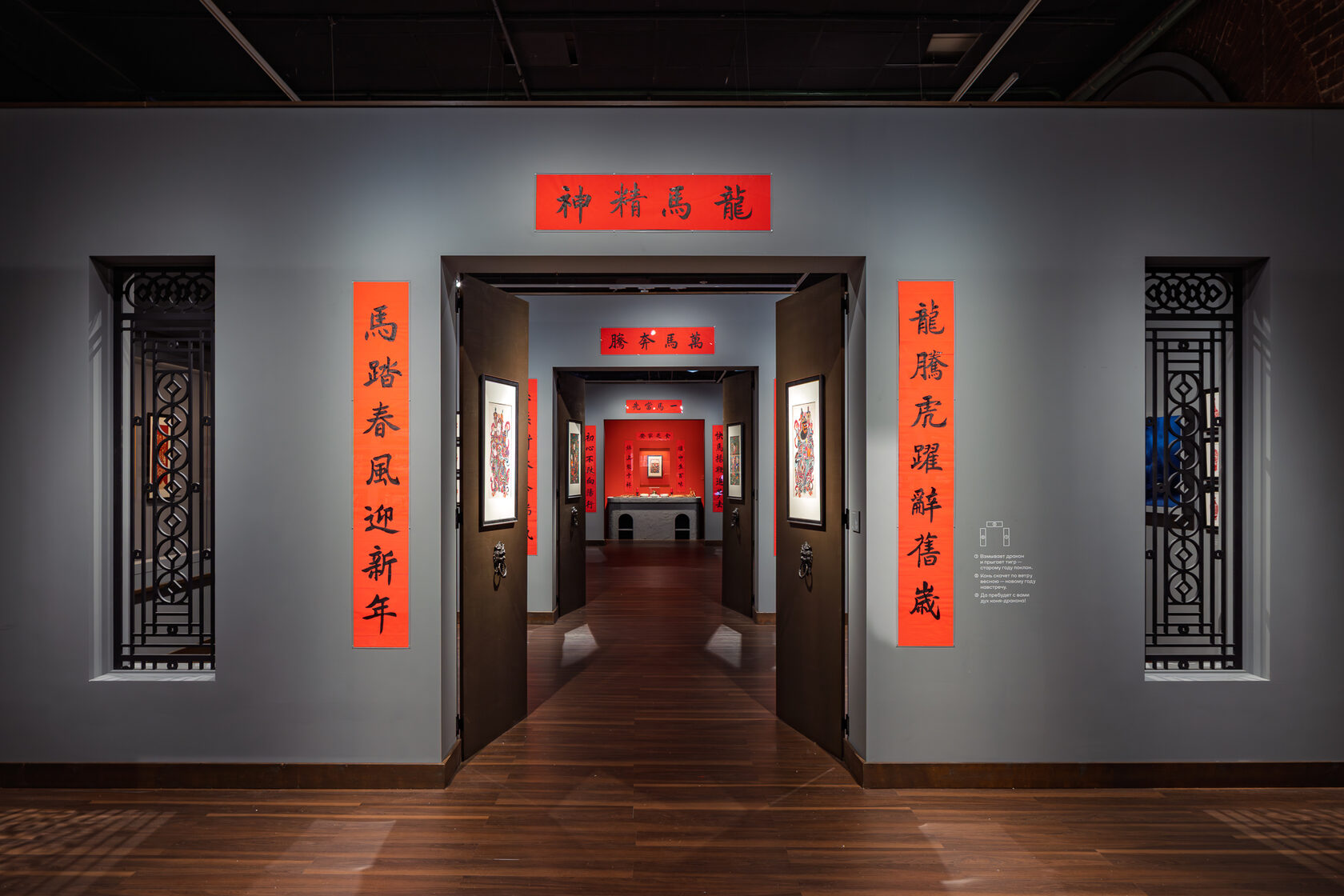
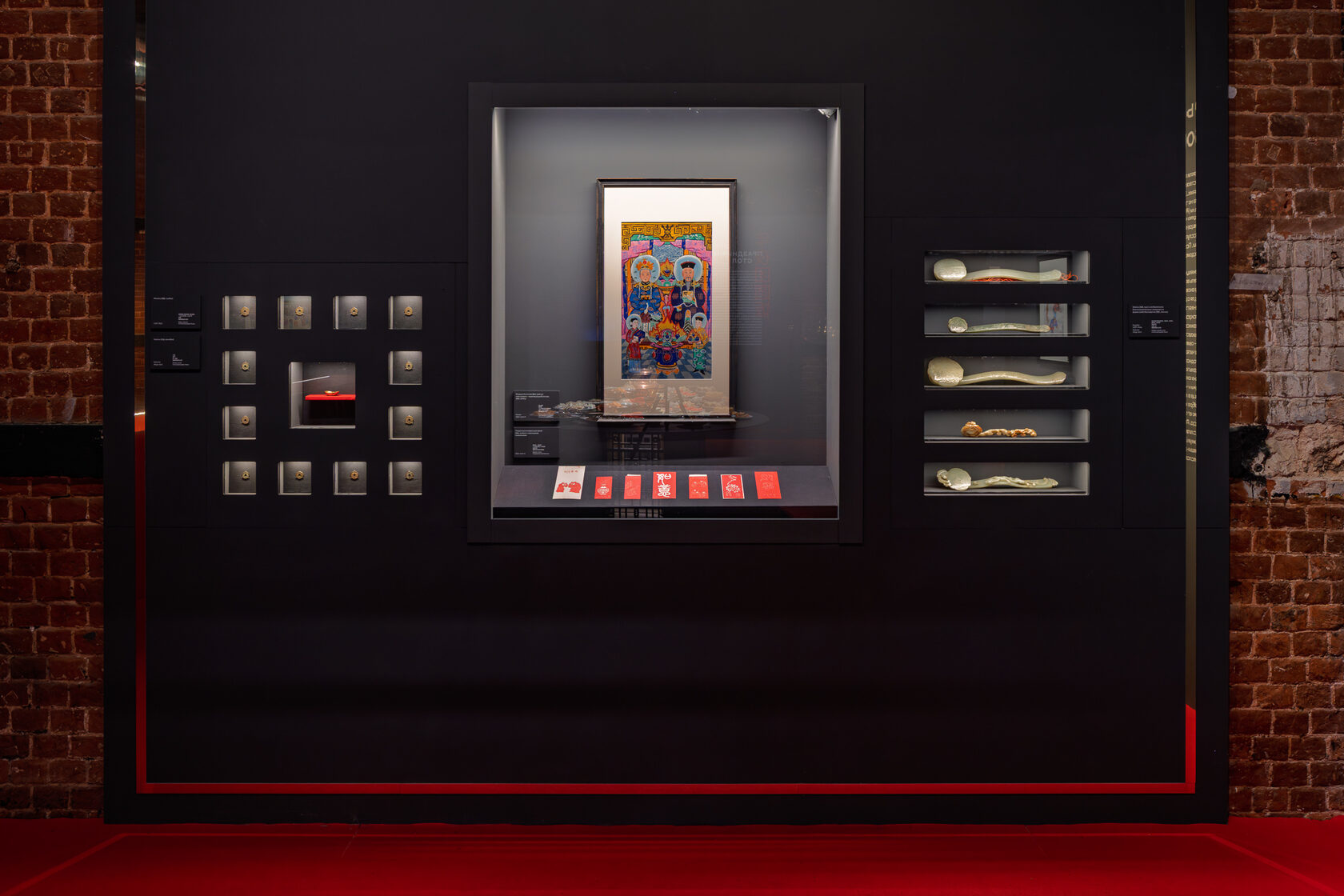
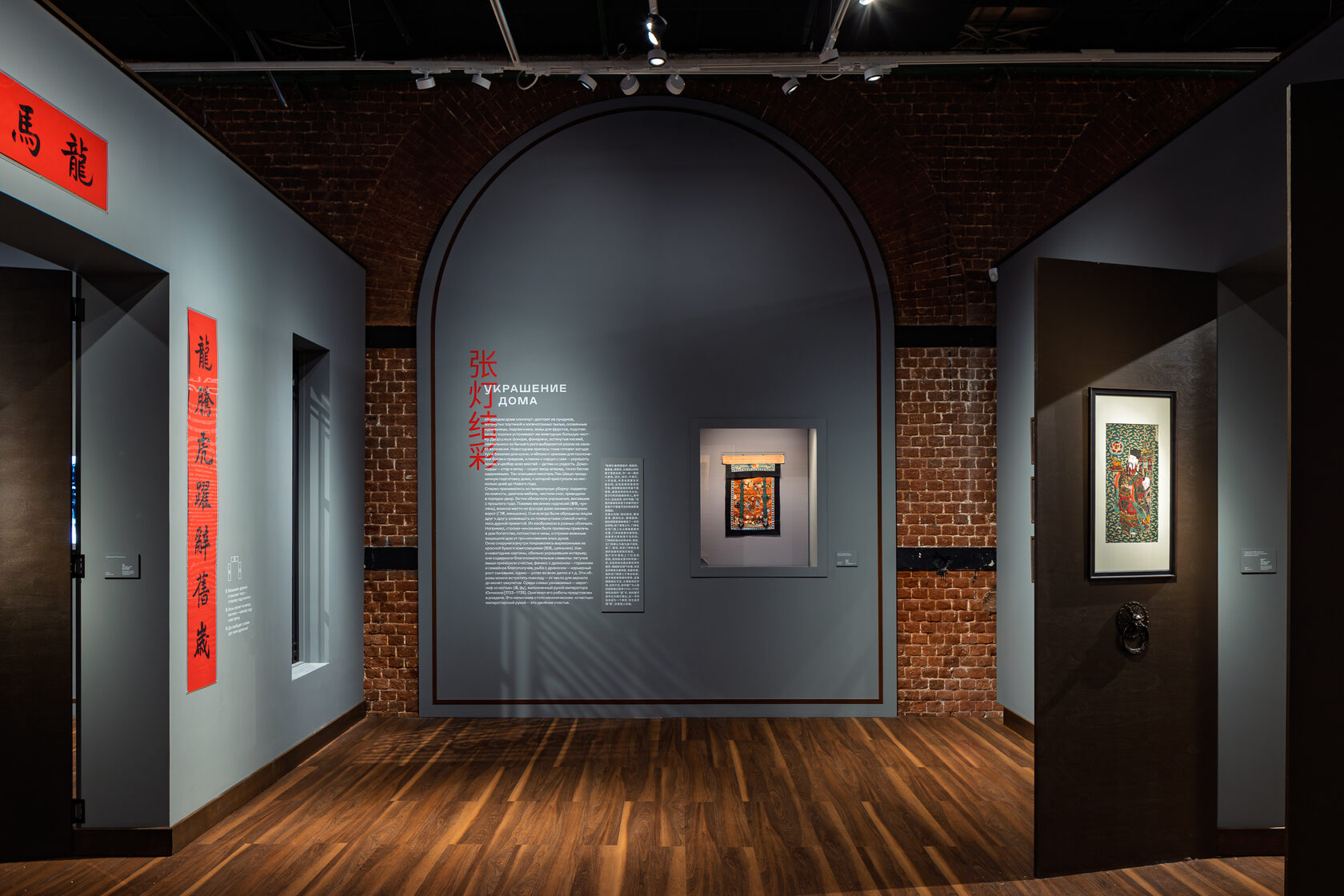
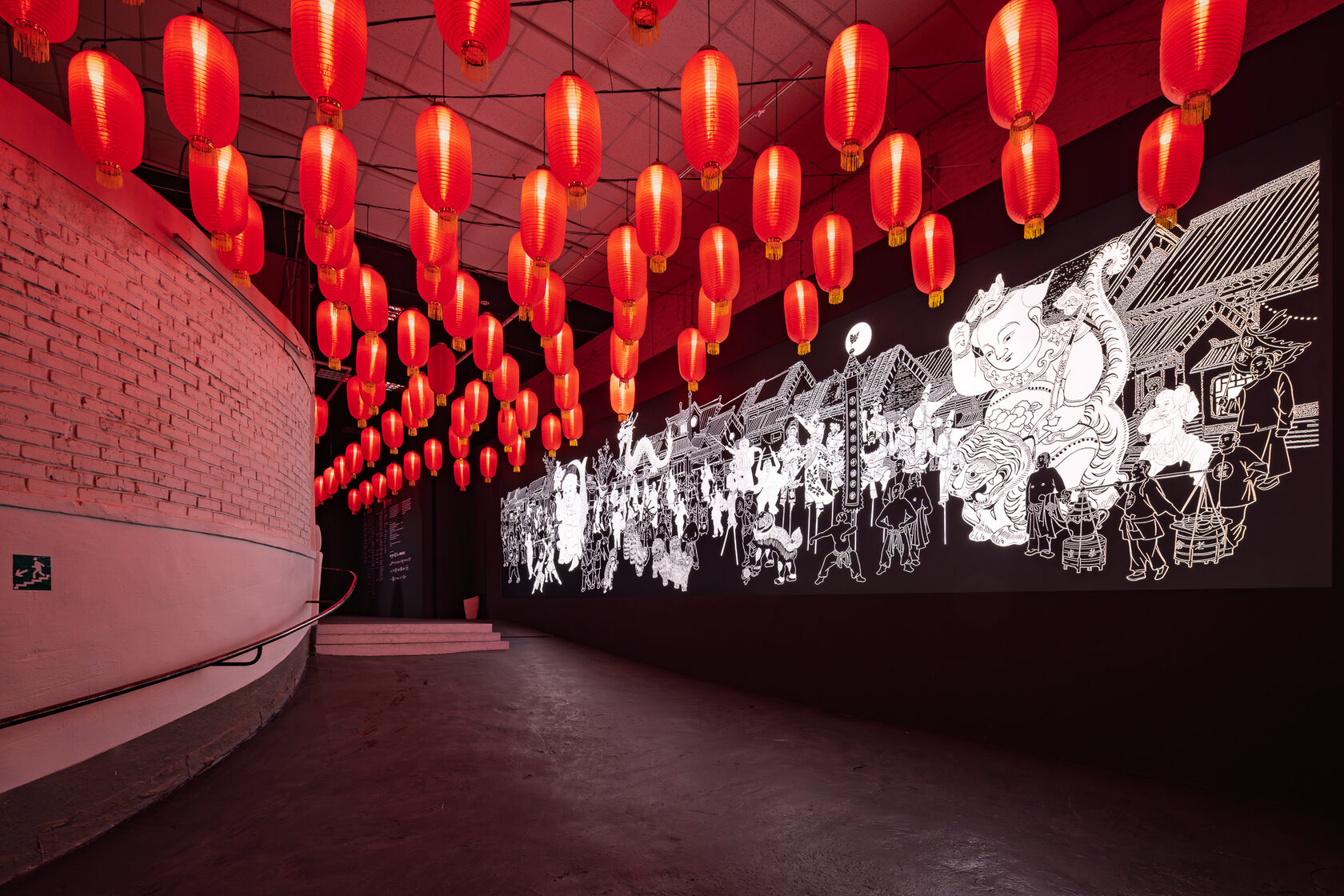
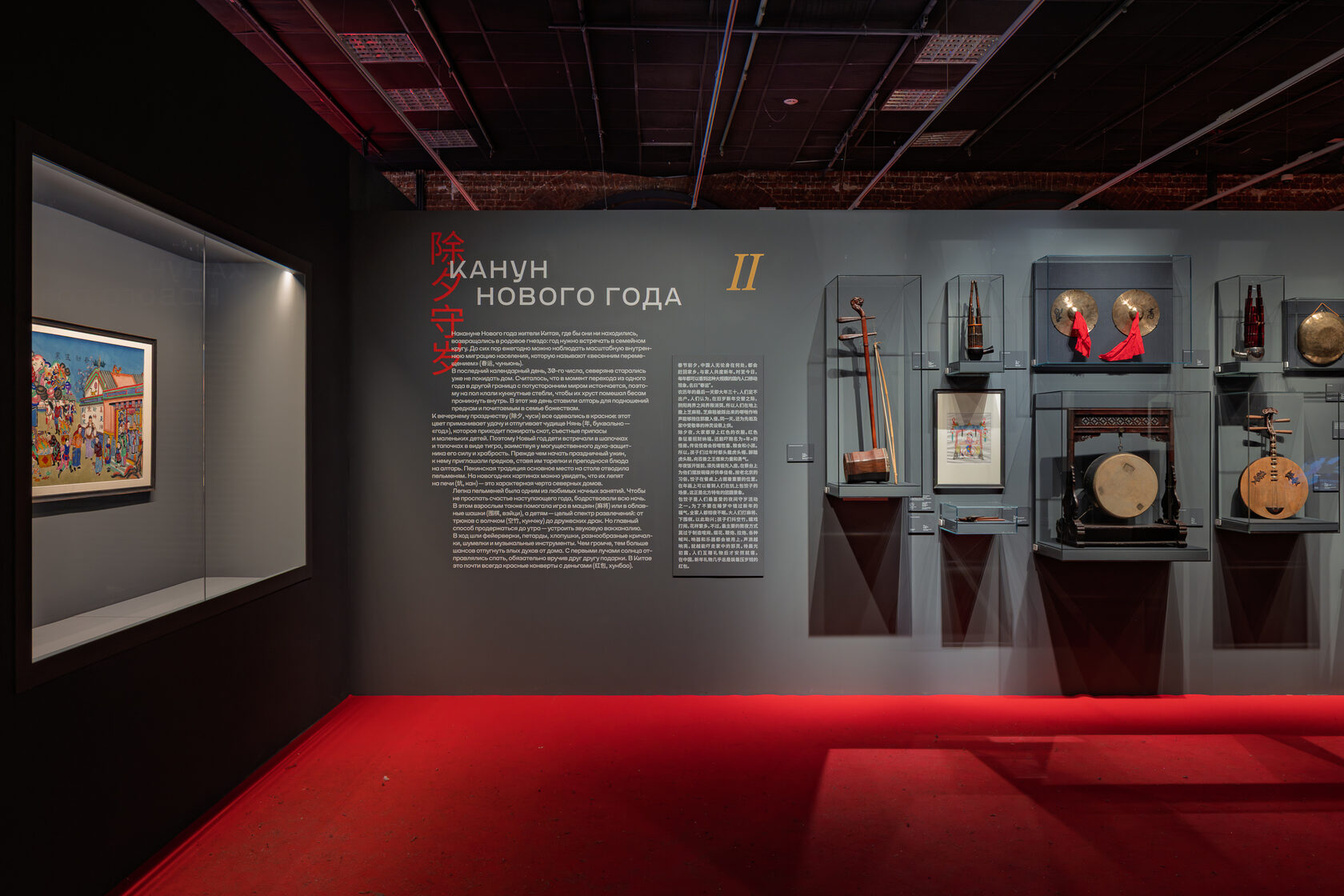
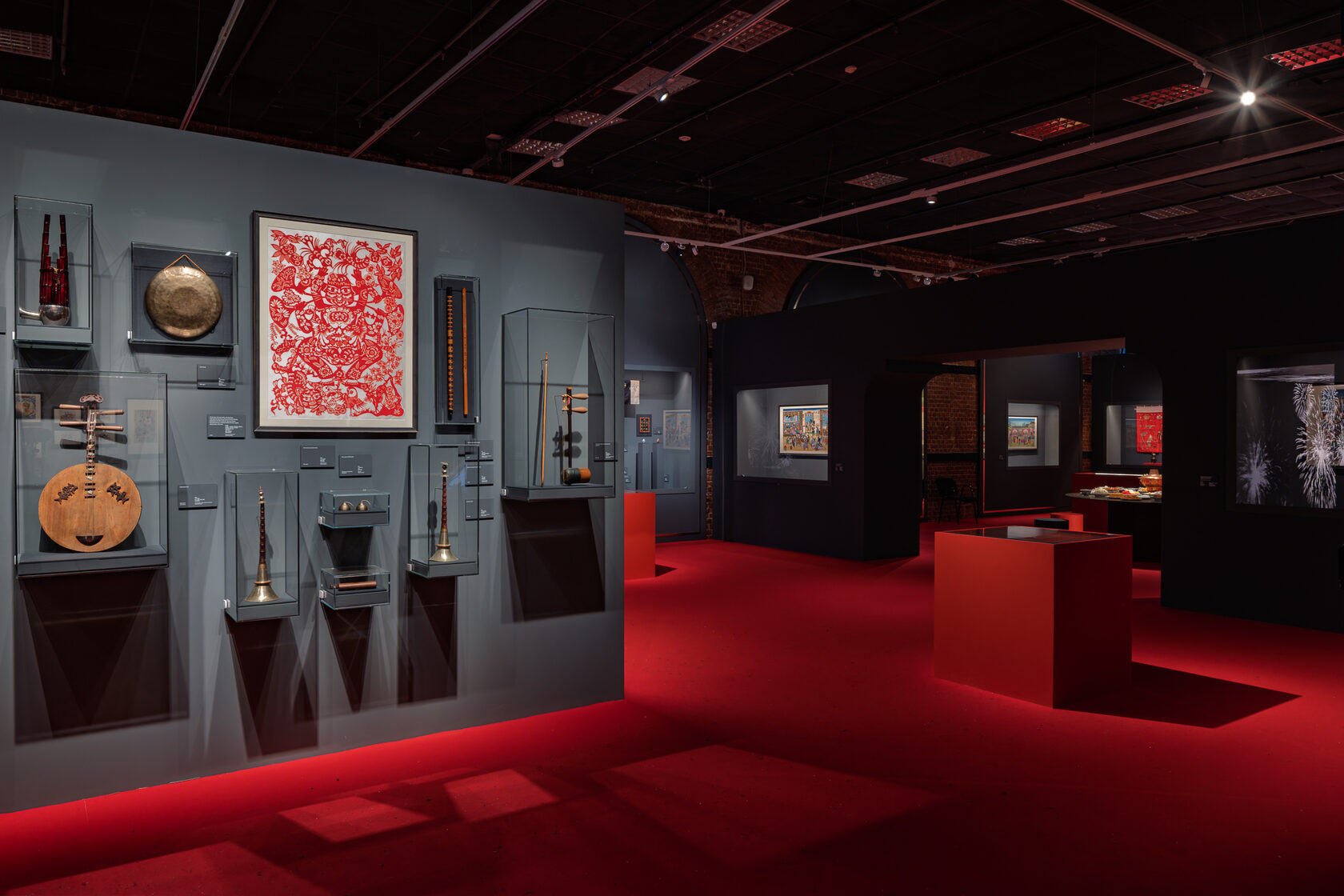
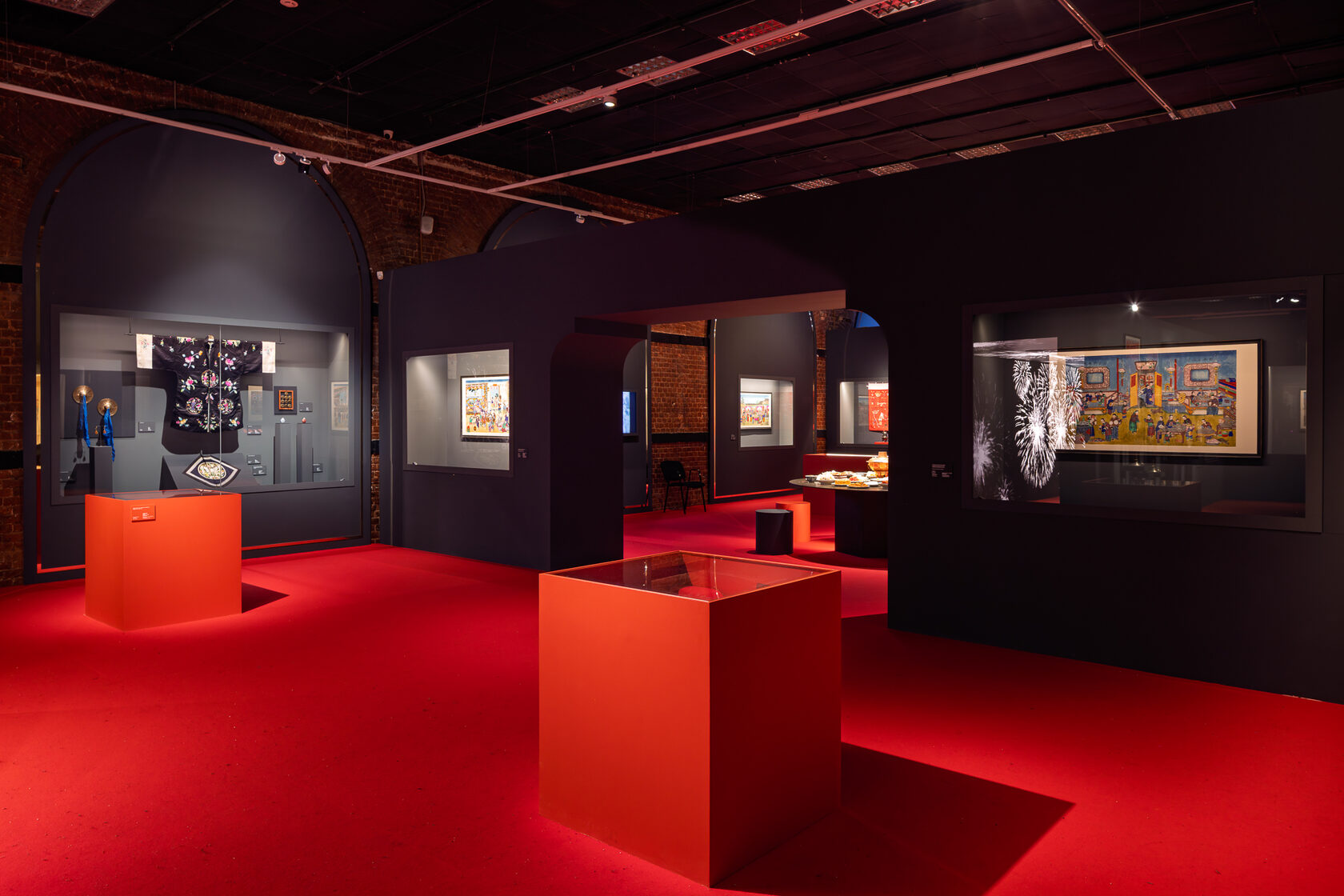
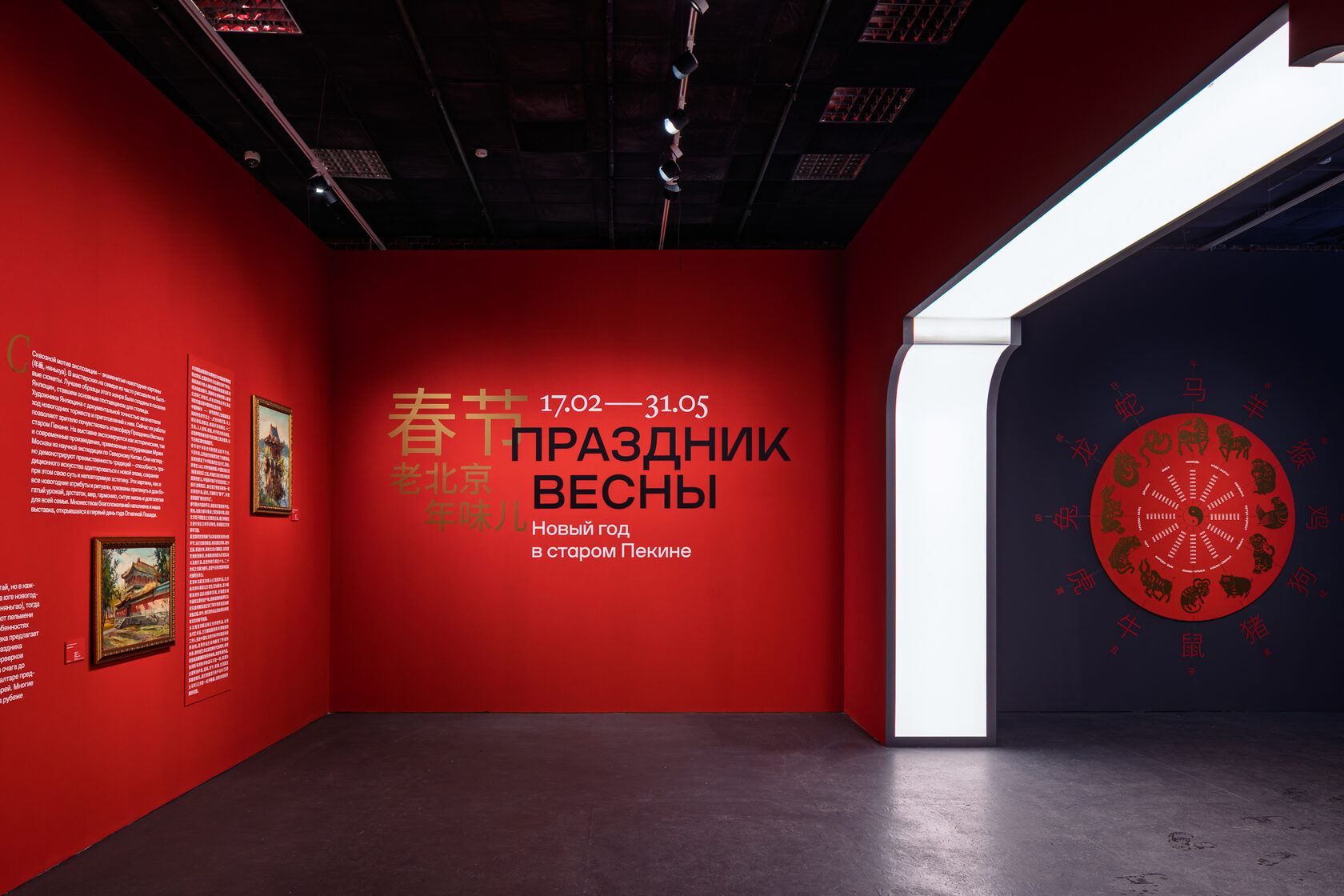
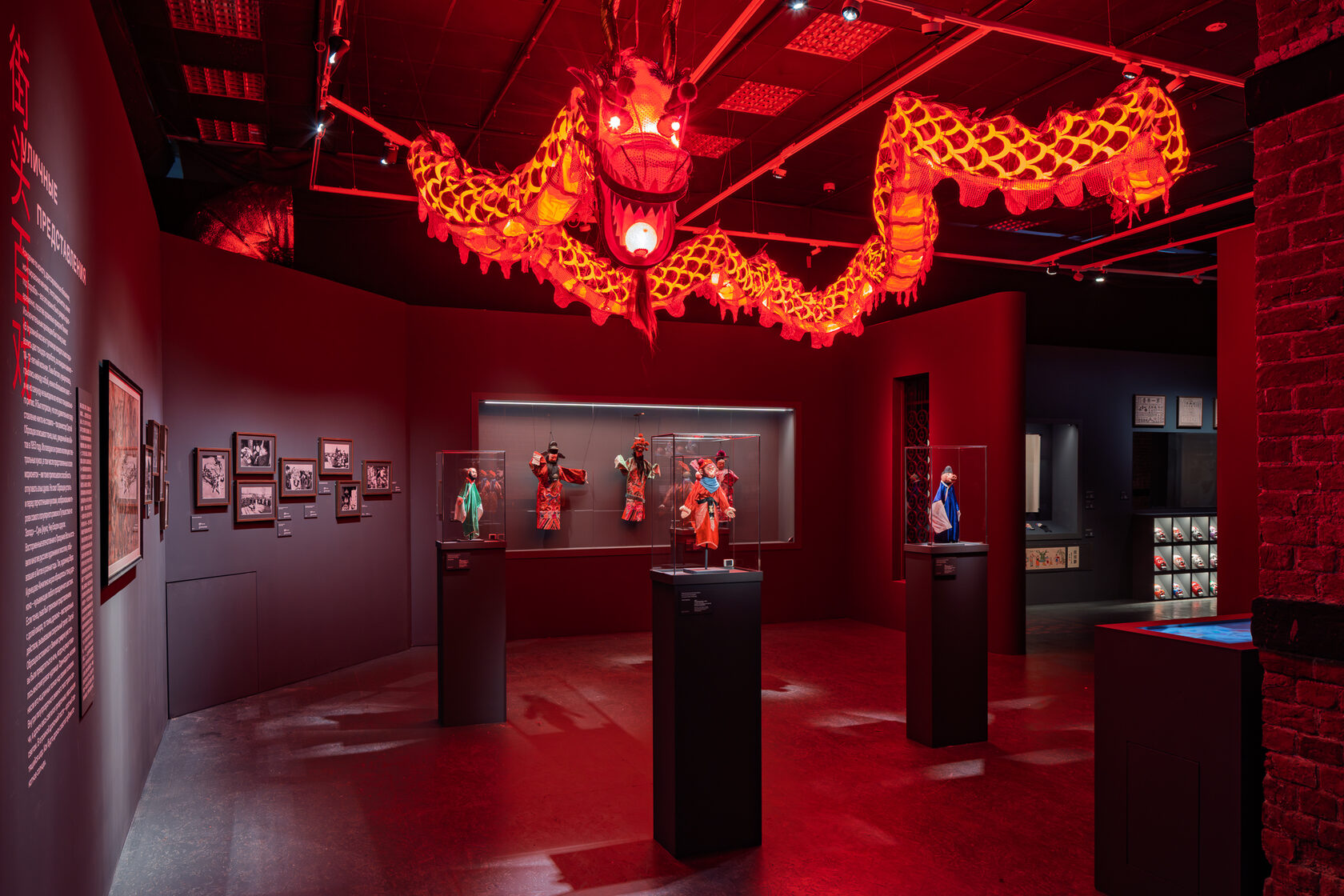
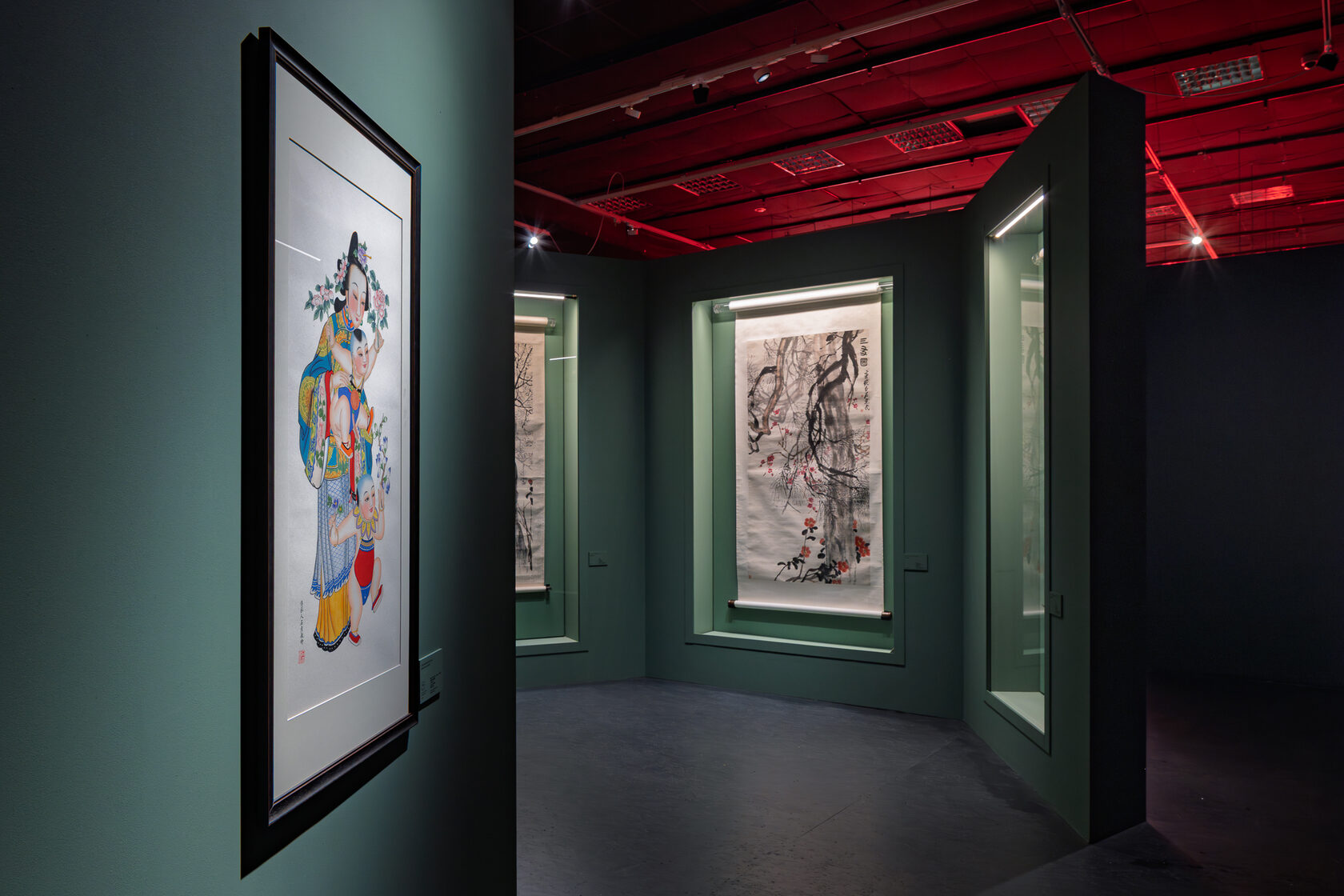
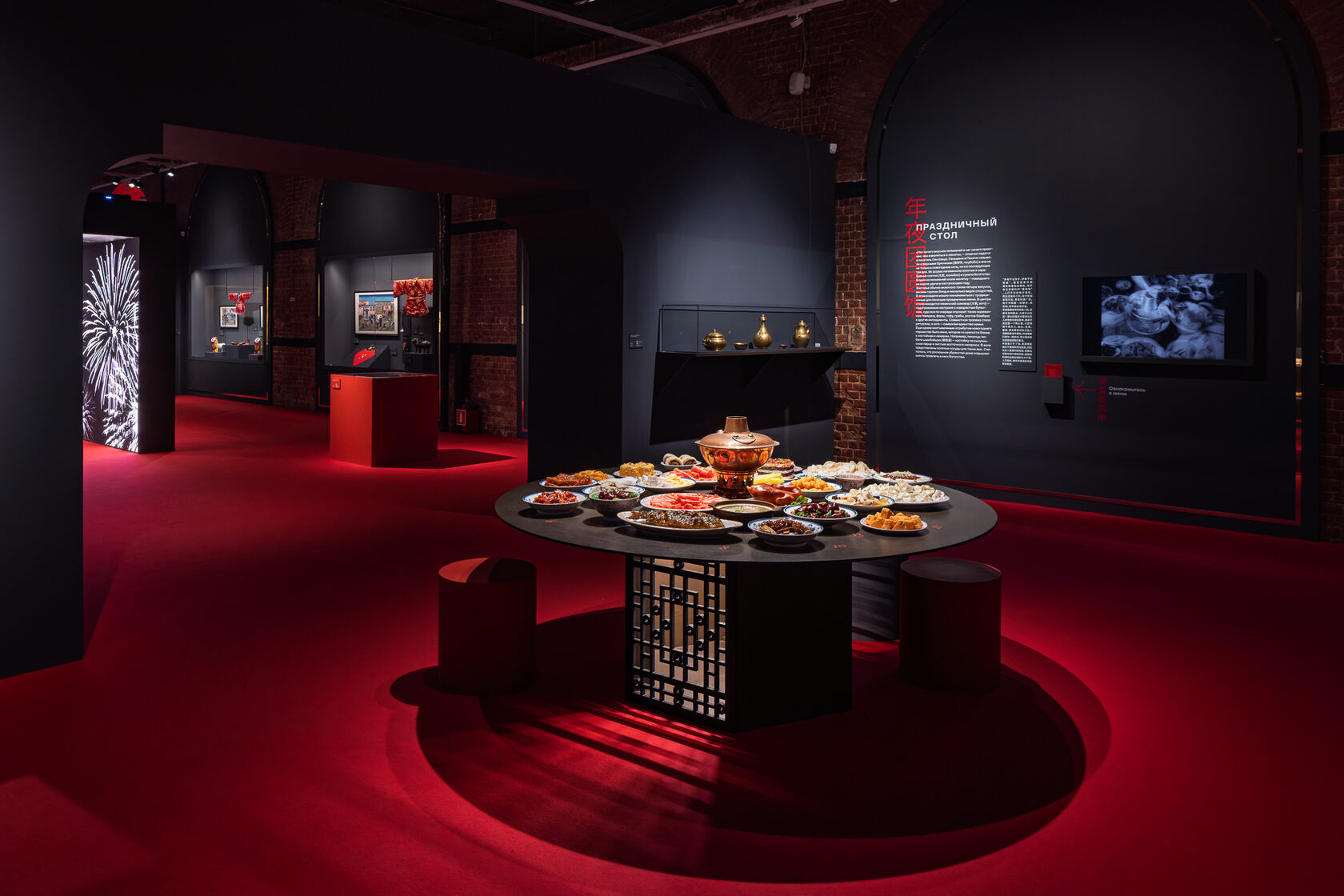
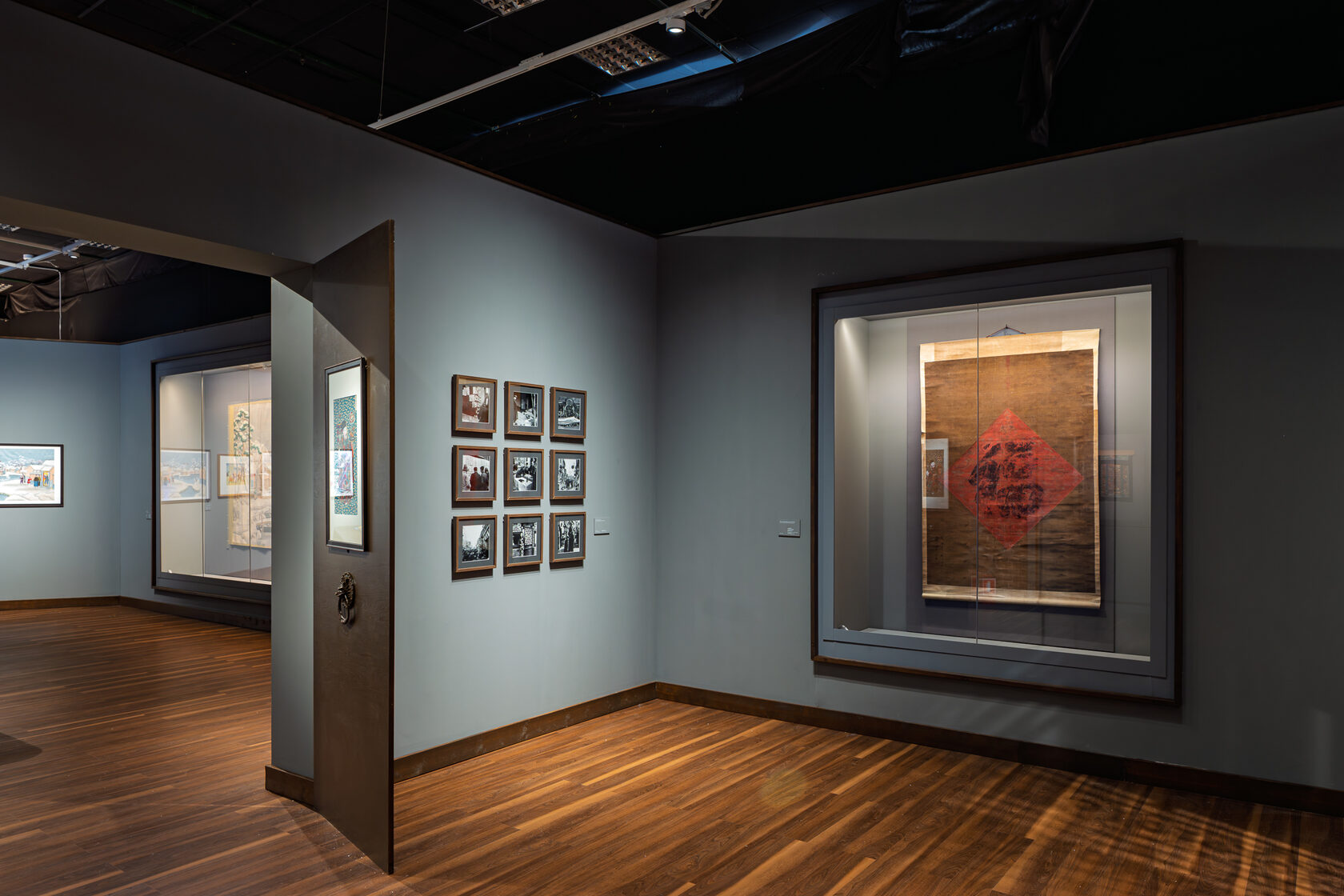
Throughout the exhibition, visitors encounter the famous New Year prints (nianhua, 年画)—traditional folk woodblock prints that illustrate every stage of the New Year celebrations.
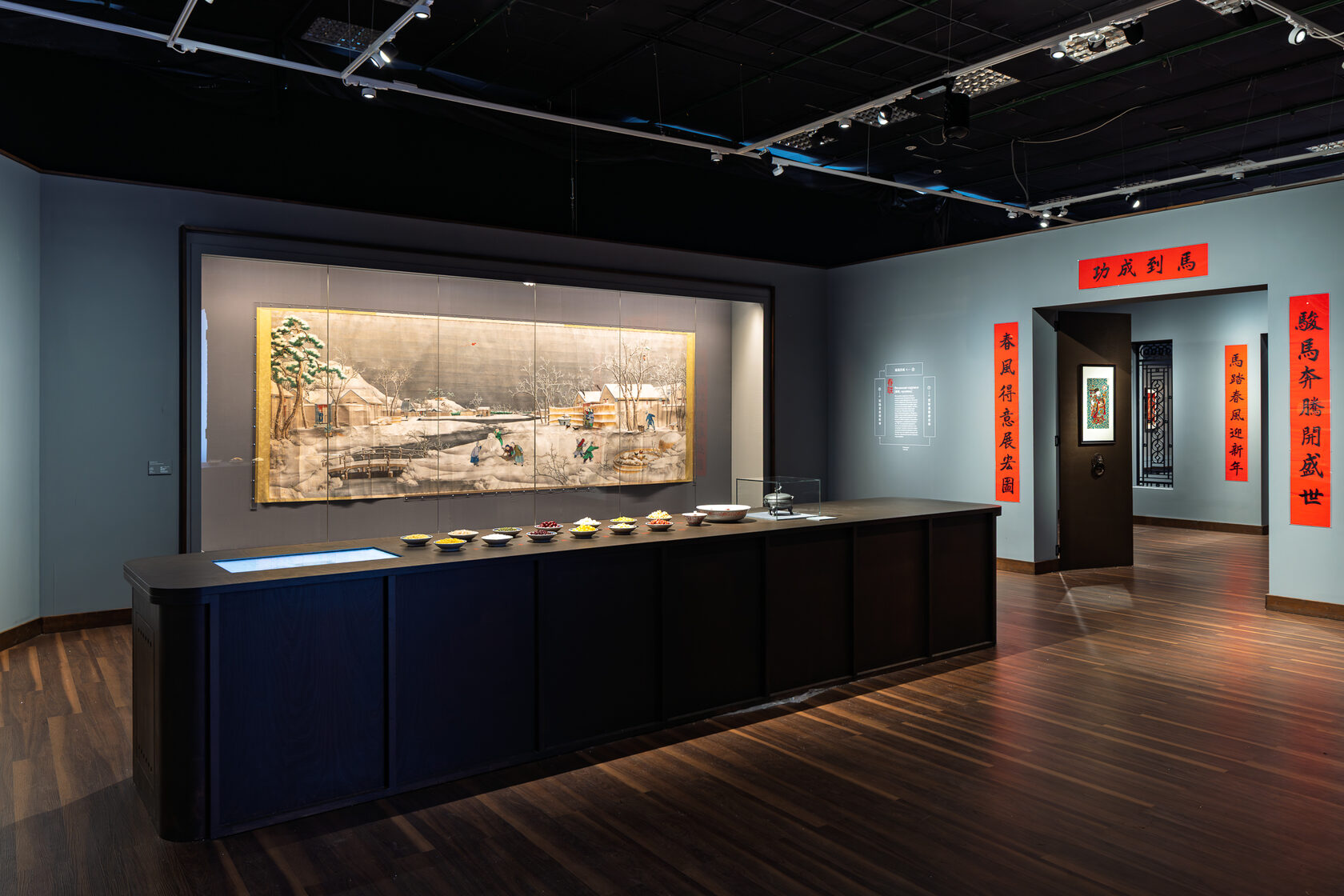
The exhibits include large-format New Year prints depicting celebrations in the streets of Beijing